Stock, deer and rabbit fencing: heights, mesh and what each fence has to stop
A fence is specified by the animal it has to stop. Choose one below and the fence draws itself to scale, with its height, mesh, posts and spacing, then plan the run and check what has to be settled before the first post goes in.
Updated 15 October 2026
What it has to stop
Five ways an animal gets past a fence
The Forestry Commission's Forest Fencing guide sets out five ways an animal crosses a fence line. Each one fixes a different part of the specification, which is why there is no general purpose fence.
Climbing or jumping
Sets the height. The height needed varies with the species, and with how much the animals want to cross.1
Pushing through or under
Sets the mesh size, and how closely the bottom of the fence follows the ground. Muntjac need a far smaller mesh than red deer.1
Burrowing under
Sets the base. Rabbit netting is turned outwards along the ground towards the rabbits, to deter them from digging.1
Breaking or chewing
Sets the wire. Rabbits may bite through thin netting where the problem is severe, so the guide recommends against 19 gauge.1
Pushing down
Sets the posts and the spacing. The guide gives cattle fences heavier struts and half the stake spacing it allows for sheep.1
Pressure matters as much as the animal
The risk of a breach depends on the quality of the fence, what the species can do, and the pressure to cross: the number of animals on one side and their need to be on the other. A panicking deer may jump or tangle in a fence it would never normally attempt, which the guide flags next to roads, areas of heavy public access and the edges of towns.1
The guide therefore treats its figures as minimums. It asks for more where conditions are severe, pressure is high, the site has a history or safety is at stake.1
The fence builder
Fence heights, mesh and posts for each animal
Every fence below is drawn to scale, using the figures published for it. The dark bars are the posts, including the part in the ground. The person is 1.75 m tall.
Fallow deer fence
- Minimum height
- 1.8 m
- Largest mesh
- 200 x 220 mm
- Typical net
- HT 13/190/22
- End posts
- 2.8 m x 12 to 18 cm
- Struts
- 2.5 m x 10 to 13 cm
- Stakes
- 2.6 m x 8 to 10 cm
- Stake spacing
- Up to 10 m
The guide records a wide range for this species, from deer not crossing a 1 m fence around a small farm woodland to deer clearing 1.8 m. Its advice is that if in any doubt, a taller fence should be installed.
Sheep fence
- Height: 0.9 to 1 m in the guide, 1.05 m under the grant
- Largest mesh: 150 x 150 mm
- Typical net: 8/80/15 or 8/90/15
- End posts: 2.3 m x 10 to 13 cm
- Struts: 2 m x 8 to 10 cm
- Stakes: 1.7 m x 8 to 10 cm
- Stake spacing: Up to 12 m on spring steel line wire
Cattle fence
- Height: 1 m in the guide, 1.05 m under the grant
- Largest mesh: 300 x 300 mm
- Typical net: 8/90/30 or 6/90/30
- End posts: 2.3 m x 10 to 13 cm
- Struts: 2.5 m x 10 to 13 cm
- Stakes: 1.8 m x 8 to 10 cm
- Stake spacing: Up to 6 m
Horse fence
- Height: 1.25 m generally recommended
- Range for horses: 1.08 to 1.38 m
- Range for ponies: 1 to 1.3 m
- Range for stallions: 1.25 to 2 m
- Lower rail: 0.5 m above the ground
- Barbed wire: Never
Muntjac fence
- Minimum height: 1.5 m
- Largest mesh: 75 x 75 mm
- Typical net: LHT 23/167/8
- End posts: 2.8 m x 10 to 13 cm
- Struts: 2.5 m x 8 to 10 cm
- Stakes: 2.5 m x 5 to 8 cm
- Stake spacing: Up to 10 m
Roe deer fence
- Minimum height: 1.5 m
- Largest mesh: 200 x 150 mm
- Typical net: HT 15/150/15
- End posts: 2.8 m x 10 to 13 cm
- Struts: 2.5 m x 8 to 10 cm
- Stakes: 2.5 m x 5 to 8 cm
- Stake spacing: Up to 10 m
Fallow deer fence
- Minimum height: 1.8 m
- Largest mesh: 200 x 220 mm
- Typical net: HT 13/190/22
- End posts: 2.8 m x 12 to 18 cm
- Struts: 2.5 m x 10 to 13 cm
- Stakes: 2.6 m x 8 to 10 cm
- Stake spacing: Up to 10 m
Red and sika deer fence
- Minimum height: 1.8 m
- Largest mesh: 200 x 300 mm
- Typical net: HT 17/190/30
- End posts: 2.8 m x 12 to 18 cm
- Struts: 2.5 m x 10 to 13 cm
- Stakes: 2.6 m x 8 to 10 cm
- Stake spacing: Up to 10 m
Rabbit fence
- Minimum height: 0.9 m, plus a 150 mm lap
- Mesh: 31 mm hexagonal
- Typical net: 18 gauge, 1,050 mm wide
- End posts: 2 m x 10 to 13 cm
- Struts: 2 m x 8 to 10 cm
- Stakes: 1.7 m x 5 to 8 cm
- Stake spacing: 10 to 14 m, or 8 m with stock
Woodwork, typical nets and stake spacing are from the Forest Fencing guide.1 Stock heights are from the guide and Countryside Stewardship,2, 3 deer heights and largest mesh from Countryside Stewardship,5 rabbit netting from the guide and FG4,4 and horse fencing from the British Horse Society.8 Deer are drawn at the shoulder heights given by the British Deer Society.9, 10, 11, 12 Other animals are drawn at an indicative size. Silhouettes are from PhyloPic (CC0), with a general deer shape standing in for muntjac.
How to read a net code
A code such as 8/80/15 gives three things: the number of horizontal wires, the height of the net between its edge wires, and the spacing of the vertical wires in centimetres. Letters at the front give the wire, where HT is high tensile at 2.5 mm, MHT medium at 2.24 mm and LHT light at 2 mm.1
Joints matter as well. Hinge joint netting is cheaper than locked joint, but it may be opened by wild deer and domestic stock. A deer scrambling over can concertina hinge joint net with no top line wire and trap a leg, which is almost impossible with locked joint.1
Where more than one animal is present
Two parallel fences are poor practice, so the requirements are combined into one specification: a mesh that excludes the smallest species, a height that stops the most agile, and the strength to resist the most powerful.1 A net with a smaller mesh at the bottom and a wider one at the top can serve for sheep and deer in one piece.1
One detail matters on a stock fence where deer are about. A single strand of barbed wire must not be installed 150 mm above the net where fallow and roe deer are present, because they get caught when they jump. It goes on the top of the net.1
If in any doubt, a taller fence should be installed. That is the Forestry Commission's advice on deer.
Posts and wire
What holds the fence up, and how many posts a run needs
The net is the part everyone sees. The fence depends on what it hangs from: straining assemblies that hold the tension, stakes that hold the line and wire that holds its strain.
Step 1 of 4
Straining posts take the tension
End post assemblies are the anchors that take and retain the tension in the line wires and netting. There are two designs, strutted and box, and both are equally effective when installed correctly. A driven strutted post must have at least 1.5 m below ground.1
Step 2 of 4
Turning posts handle the bends
Contour and turning posts have no strut, but they must have an underground cross member. They are used for a minor change of direction, where the internal angle is greater than 110 degrees, or to hold a fence down in a gully. Below 110 degrees a strut is required.1
Step 3 of 4
Stakes hold the line
Intermediate stakes are pointed and driven in at regular intervals, or varied to follow the ground, but never further apart than the maximum. The guide's warning is that a fence should not be compromised just to save money by increasing the spacing.1
Step 4 of 4
Line wires carry the net
Tensioned line wires stop the net sagging between stakes. The guide recommends 2.65 mm spring steel, which keeps its tension when strained. Mild steel stretches permanently and allows the fence to sag, so it is not recommended for this job. Staples guide the wire and never pinch it.1
Timber and machinery
Timber in a permanent fence is always treated with preservative.1 The current grant specification is softwood that is fully peeled and pressure treated or otherwise treated to Use Class 4 under BS 8417.2 Round posts are recommended over sawn, and a treated post that has been cut needs its protective layer renewed.1
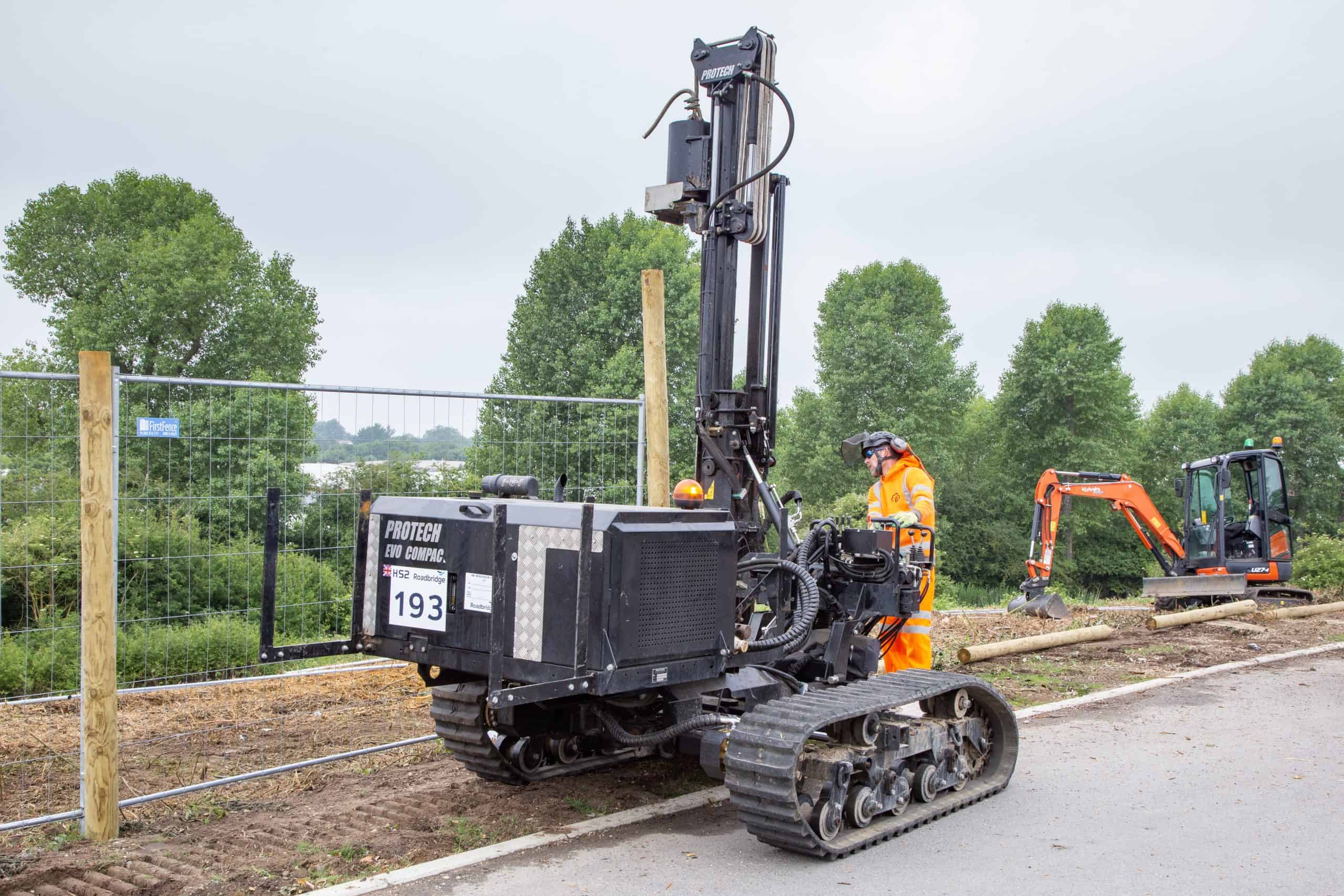
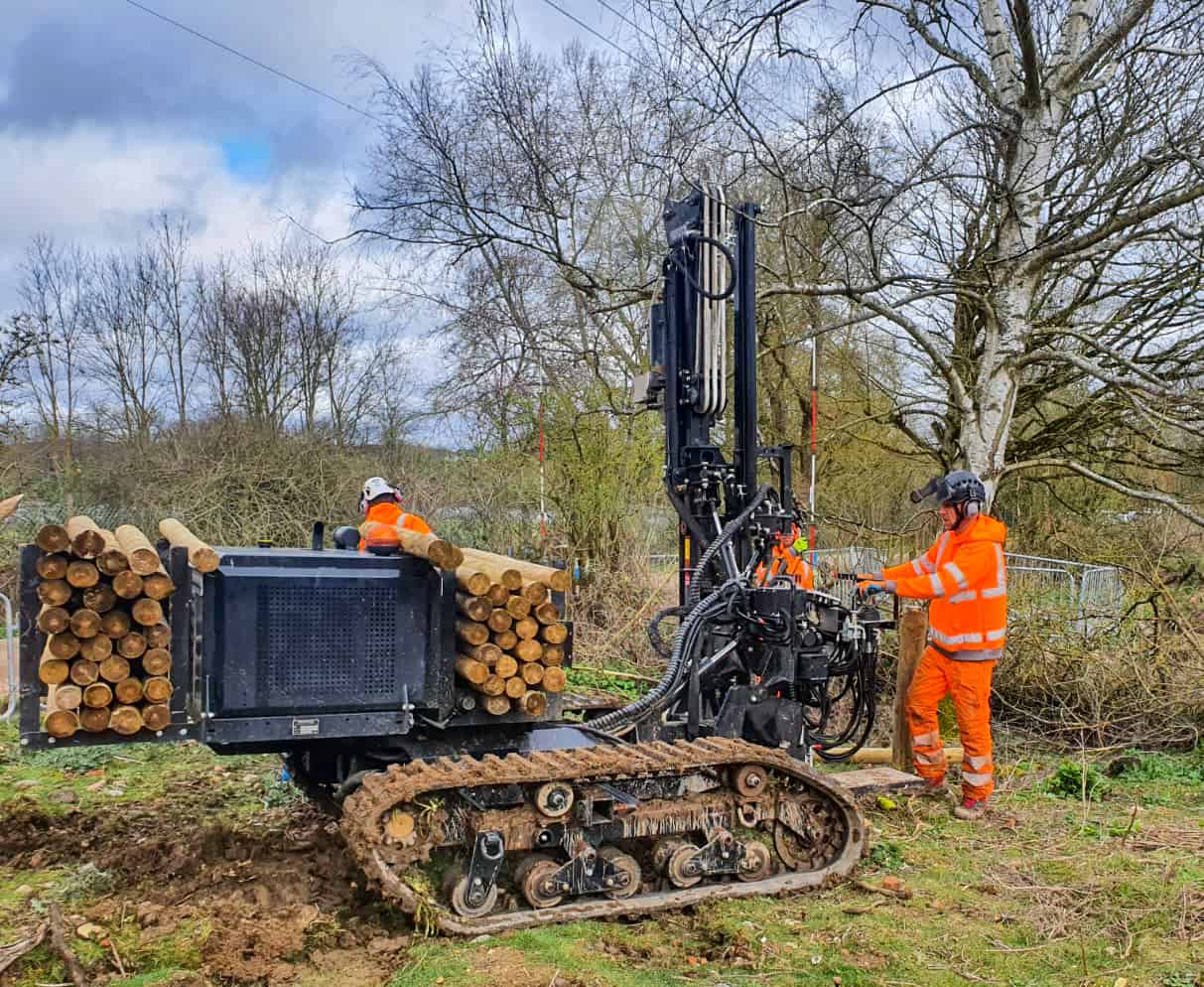
A machine-driven post needs more length than a hand-set one. End and turning posts driven by machine should be at least 2.8 m for stock and 3.5 m for deer.1 Our Protech Evo tracked post knocker carries the fencing materials to the work place and removes the need for manual knocking, and it arrives behind a pickup with no HGV required.
Plan a fence run
The guide's way of estimating materials is to walk the fence line with a map and mark the straining posts, the struts each one needs and the stake spacing.1 This planner does the same arithmetic from the published limits, for a first figure before anyone has walked the route.
Changes of direction
3
Straining assemblies
4
Struts
48
Intermediate stakes
600 m
Netting and each line wire
Stakes at 12 m, sections of up to 600 m. A first estimate on level, uninterrupted ground. Gateways, slopes, gullies and pressure from animals all add posts, so the walked route replaces these figures.
Stake spacing is the Forest Fencing guide's maximum on spring steel line wire. Section limits on stock fences are from Countryside Stewardship, 600 m for high tensile and 150 m and 3 m stake spacing for mild steel.2, 3 For rabbit netting the guide says 1,000 m is possible on long, straight, flat lines, and for deer it describes up to six 50 m rolls of high tensile net joined and strained together.1 One strut at each end and two at each assembly between them.
Before the first post
What to check before a fence goes in
These checks can be made from a map, the authority's records and the network operators before anyone is on site. Tick them off as they are settled.
0 of 8 checks confirmed
A fence is permitted development up to 2 m above ground level, or 1 m next to a highway used by vehicular traffic. It is not permitted within the curtilage of a listed building, or where it would affect the enclosure around one.13
This matters most for deer fencing. The Forest Fencing guide recommends the tallest fences along roadsides,1 which is exactly where the permitted height is lowest, so a roadside deer fence is raised with the local planning authority first.
Obstructing a public right of way is a criminal offence, and that includes permanent or temporary fences. The local highway authority's permission is needed before any new structure goes on a right of way, and an unauthorised one may be removed at the landowner's expense.14 If a fence crosses a right of way, a suitable gate, stile or bridle gate must be provided.1
Under section 38 of the Commons Act 2006, consent is needed for restricted works on registered common land. These are works that prevent or impede access, and fencing is the first example given.15 A fence under a Countryside Stewardship agreement must not block or restrict access to open access land either.2
Natural England's advice is to install badger gates if a rabbit fence crosses any badger runs.7 Without one, badgers will tear a hole in the netting or dig underneath it. The gate needs to be heavy timber where muntjac are present, because they have been reported opening metal mesh gates.1 Grant funding for a badger gate applies only to routes in use now and restricted by a new fence line.6
HSE's guidance is to ask the network operator for plans where its cables may be present, and to have an operator's representative locate them where work will be close.16 HSG47 sets out the three parts of a safe system of work: planning it, locating and identifying the services, and carrying out the excavation safely.17 The guide also says to check with the landowner for underground pipes and cables.1
The Forest Fencing guide says power companies should be consulted if electric or metal fences are to be erected or dismantled within 40 m of overhead cables, and a fence should never be attached to electricity poles.1 HSE advises keeping activities such as stacking materials and moving ladders or pipes at least 10 m horizontally from overhead lines, or consulting the network operator if that clearance cannot be kept.16
The guide's checklist covers the visual impact of the line, ground conditions, watercourse crossings, established deer and badger paths, and raised ground outside the fence that animals could jump from. It also advises consulting neighbours.1
Who is responsible
Who is responsible once the fence is up
A fence takes on a legal role as soon as stock go behind it. These are the main points for a landowner in England. Scotland, Wales and Northern Ireland have their own rules in some of these areas.
Livestock that strays is its owner's liability
Under section 4 of the Animals Act 1971, where livestock strays on to land in another person's ownership or occupation, the person it belongs to is liable for damage to that land or property, and for expenses reasonably incurred in keeping the animals. Horses straying on to land in England have their own provision.18
The duty of care extends to animals straying on to a highway
Section 8 of the Animals Act 1971 removes the old rule that excluded a duty to take care that animals do not stray on to a highway. A narrow protection remains for animals placed, with the right to do so, on common land, a town or village green, or land in an area where fencing is not customary.19
In England, rabbit control is a legal duty
The government's guidance is direct: you must control rabbits on your land in England, excluding the City of London and the Isles of Scilly. If that is not possible, you must stop them damaging adjoining crops by putting up rabbit-proof fencing, and you can be prosecuted if you take no action.7
A fence may still need supporting with other control methods, because rabbits can both burrow under and climb over.1
A forgotten fence becomes a hazard
The guide is firm that fences must not be forgotten. Unmanaged fences are unsightly, act as litter traps and can trap or injure larger wild mammals, dogs or the public. Inspections cover staples pulled out, holes, damage after snow or strong wind, gates and stiles, and watergates.1
Once a fence is no longer required, it should be dismantled and the materials removed for safe disposal or reuse. Tensioned wire can spring back several metres per 100 m, so old fencing is taken down with care.1
Doing the work
From bare land to a working smallholding
On a mixed holding, one project may need several of the specifications above, built around how each part of the land will be used.
Case study
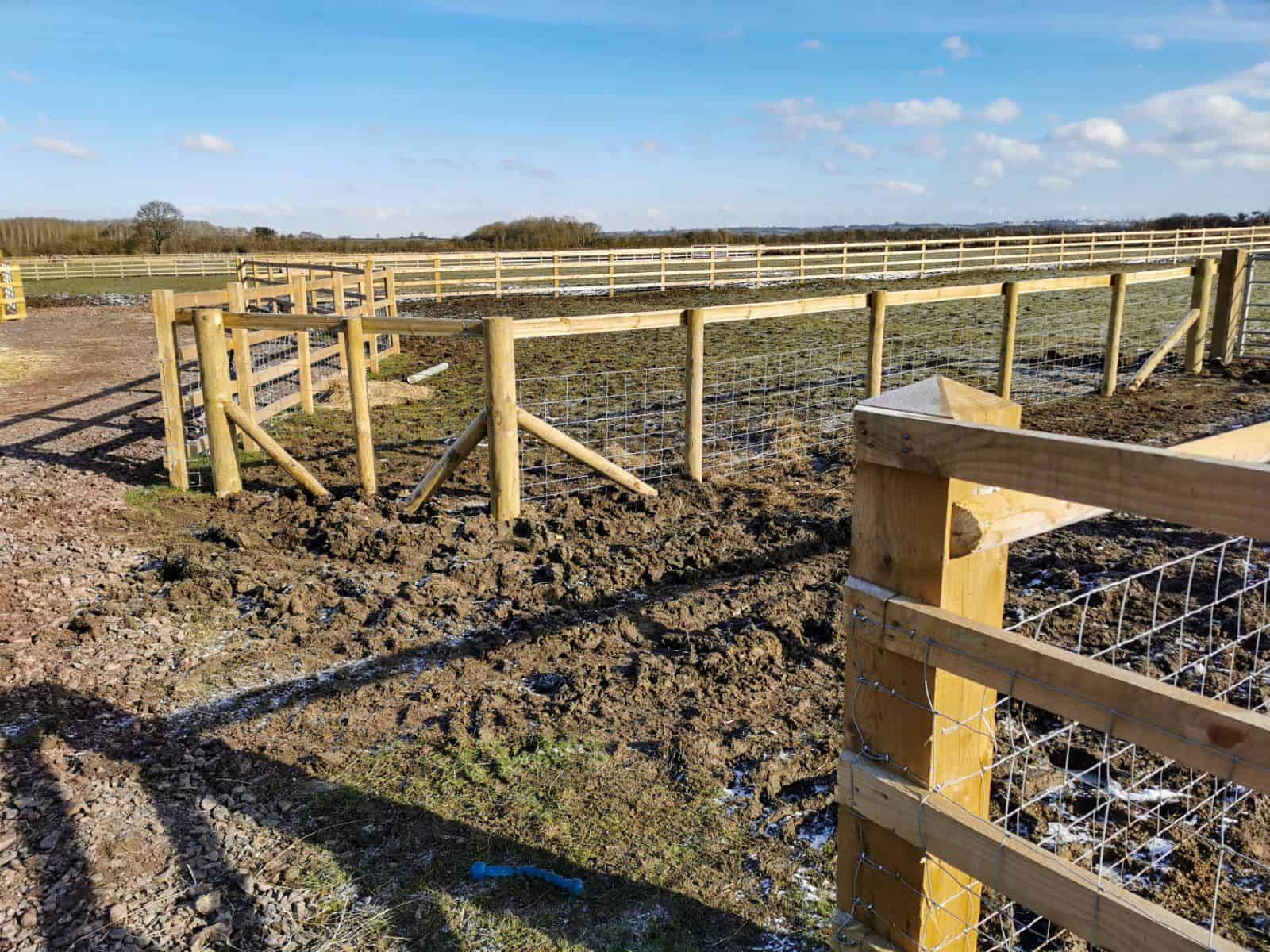
More than 2,000 metres of fencing for horses, pigs, sheep, goats and poultry
PB Forestry were hired by a private client to turn barren arable land into a fully operational smallholding, with paddocks, pig enclosures, chicken runs and a manège. We installed wire fencing for perimeter security and post and rail suited to the horses, with sheep and goat enclosures built with close attention to spacing and tension.
Read the fencing case studySafe working on a fencing job
HSE's leaflet AFAG104 is the guide's reference for fencing. Its summary is practical: eye protection and gloves when cutting wire, a dispensing reel for line wire, the post retaining strap on a vehicle mounted driver, mechanical help or team lifting for straining posts and heavy rolls, and great care when dismantling old fences, because wire can unexpectedly release and recoil.1
A 1.8 m roll of high tensile netting can weigh 120 kg, and nets wider than 1.5 m can be difficult to handle without machinery.1 Our mini-digger post knocker and auger handles regular post insertion and work such as newt fencing, and bores post holes for concreted posts at gateways.
For fencing around new trees, see our planting service and our article on mixed species planting.
Where PB Forestry come in
We install agricultural and security fencing, along with fence post installation and repair. Where the boundary needs opening up first, our vegetation clearance teams clear the line before the posts go in. Send us a plan of the route and tell us what the fence has to stop.
Our fencing serviceThe short version
Fencing in six points
Start from the animal. How it crosses a fence sets the height, the mesh, the base and the strength. There is no general purpose specification.
Sheep and cattle need about 1.05 m, roe and muntjac 1.5 m, and fallow, red and sika 1.8 m. Rabbits need 0.9 m of 31 mm hexagonal netting with a 150 mm lap.
The figures are minimums. Roadsides, large areas and high pressure all call for more, and the guide's advice on deer is to go taller if in any doubt.
Straining assemblies, stake spacing and line wire hold the fence together. Spring steel allows the widest spacing, while mild steel means many more posts.
Check planning height, rights of way, common land, badger runs, archaeology and services before the first post. Deer fences beside roads are the case most likely to need planning permission.
Owners are liable for stock that strays. A fence is inspected for as long as it is needed, and removed when it is not.
Sources
This guide is general information and is not legal advice. Every statement of law or official guidance above is drawn from the sources listed here, last checked on 6 November 2026. Legislation and guidance change, so confirm the current position before relying on it.
- 1Forestry Commission, Forest Fencing, Technical Guide, Roger Trout and Harry Pepper (2006)
- 2Rural Payments Agency and Natural England, Countryside Stewardship FG1: Fencing
- 3Rural Payments Agency and Natural England, Countryside Stewardship FG2: Sheep netting
- 4Rural Payments Agency and Natural England, Countryside Stewardship FG4: Rabbit fencing supplement
- 5Rural Payments Agency and Natural England, Countryside Stewardship FG9: Deer fencing
- 6Rural Payments Agency and Natural England, Countryside Stewardship FG14: Badger gate
- 7Natural England and Defra, Rabbits: how to control numbers
- 8The British Horse Society, Fencing
- 9British Deer Society, Red deer
- 10British Deer Society, Fallow deer
- 11British Deer Society, Roe deer
- 12British Deer Society, Muntjac deer
- 13legislation.gov.uk, Town and Country Planning (General Permitted Development) (England) Order 2015, Schedule 2, Part 2, Class A
- 14Natural England and Defra, Public rights of way: landowner responsibilities
- 15Defra and the Planning Inspectorate, Common land guidance sheet 1a: consent to construct works on common land
- 16Health and Safety Executive, Electricity in agriculture: overhead power lines and underground cables
- 17Health and Safety Executive, HSG47: Avoiding danger from underground services (third edition, 2014)
- 18legislation.gov.uk, Animals Act 1971, section 4
- 19legislation.gov.uk, Animals Act 1971, section 8
Photograph credits
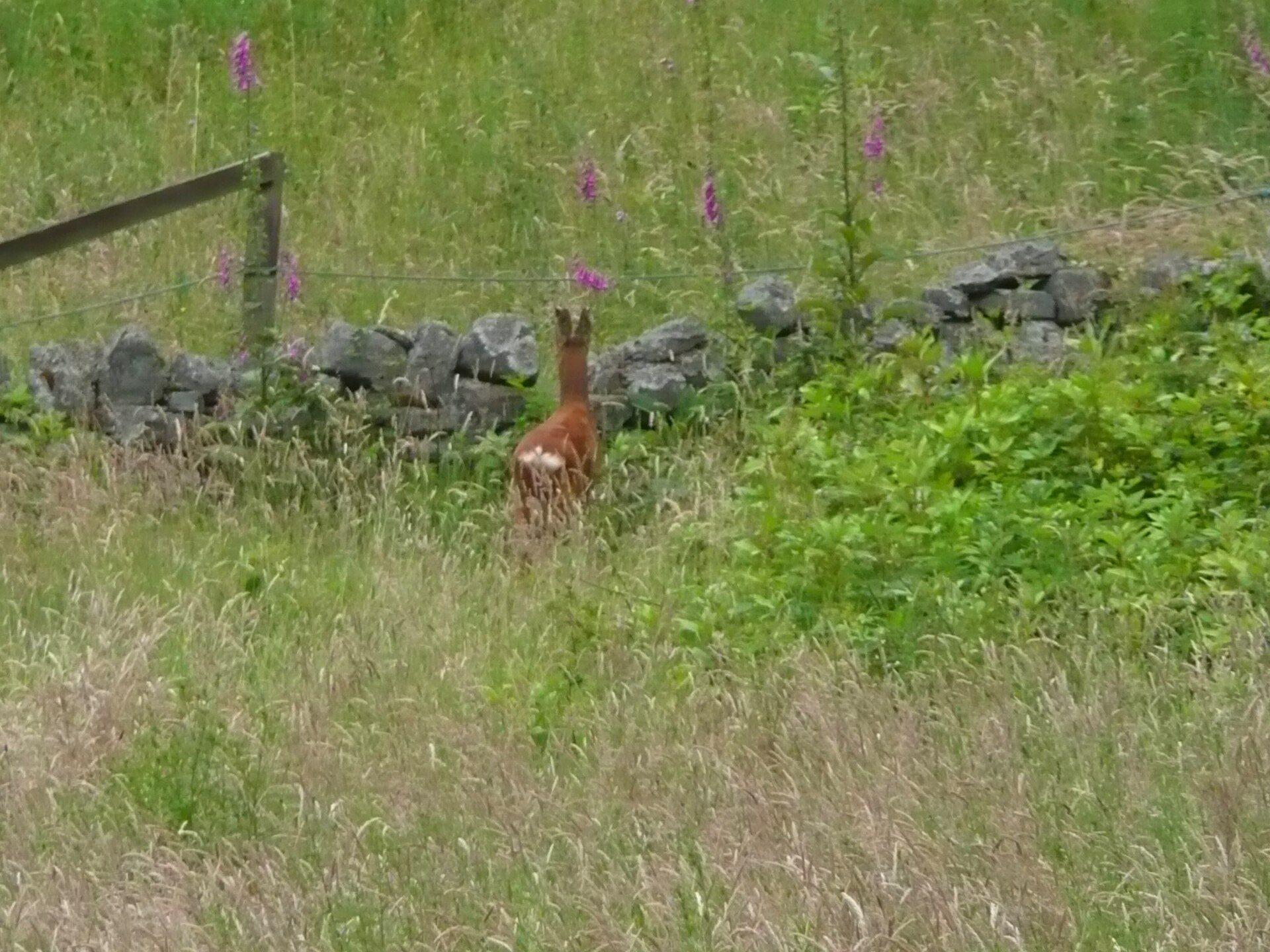
- Roe deer standing in long grass, about to jump a stone wall topped by a wire fence. Photo: Humphrey Bolton, CC BY-SA 2.0, via Wikimedia Commons
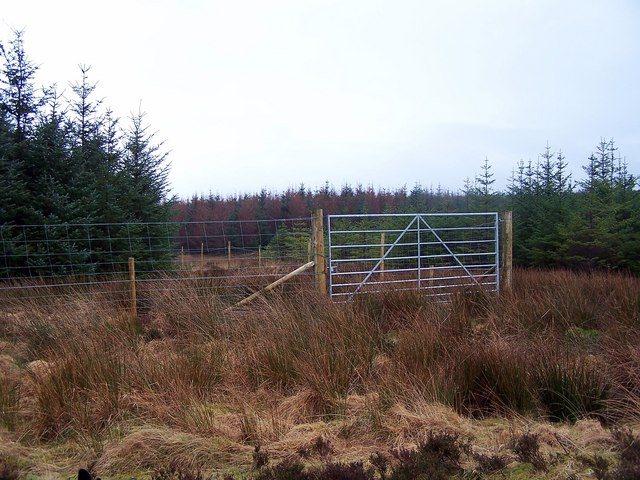
- Tall wire deer fence and metal gate running across rough ground in front of young conifers. Photo: Richard Dorrell, CC BY-SA 2.0, via Wikimedia Commons
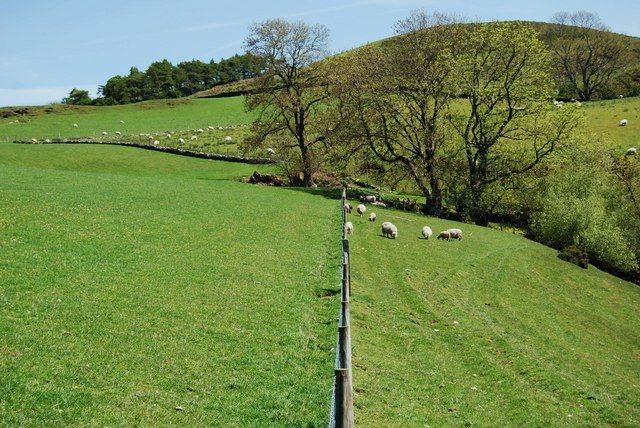
- Newly erected sheep fence running straight down a green hillside with sheep grazing on both sides. Photo: John Haynes, CC BY-SA 2.0, via Wikimedia Commons
These photographs have been resized and cropped to fit the layout. All other photographs are PB Forestry's own.
Get in touch today
Companies we have worked with