

Vegetation Clearance
Send an enquiry
Responsible Land Preparation Before You Work
Vegetation clearance is an important step in preparing land for construction, infrastructure or environmental work. From clearing overgrown sites to managing invasive plants, our approach ensures the land is safe, accessible and ready for what comes next, all while protecting surrounding habitats.
We use a range of environmentally responsible methods, including forestry mulching, low ground pressure equipment and ecological site clearance. These techniques allow us to remove vegetation quickly and efficiently without damaging the soil or local biodiversity.
Whether you need selective clearing, full site clearance or support with habitat restoration, we have the tools and experience to deliver clean, professional results with minimal impact.
Where a clearance project includes re-establishment, our planting and hydroseeding services cover trees, hedges and ground cover.
Need help clearing a site? Fill out our quick inquiry form and we will be in touch to discuss your project.
Mechanical vegetation clearance
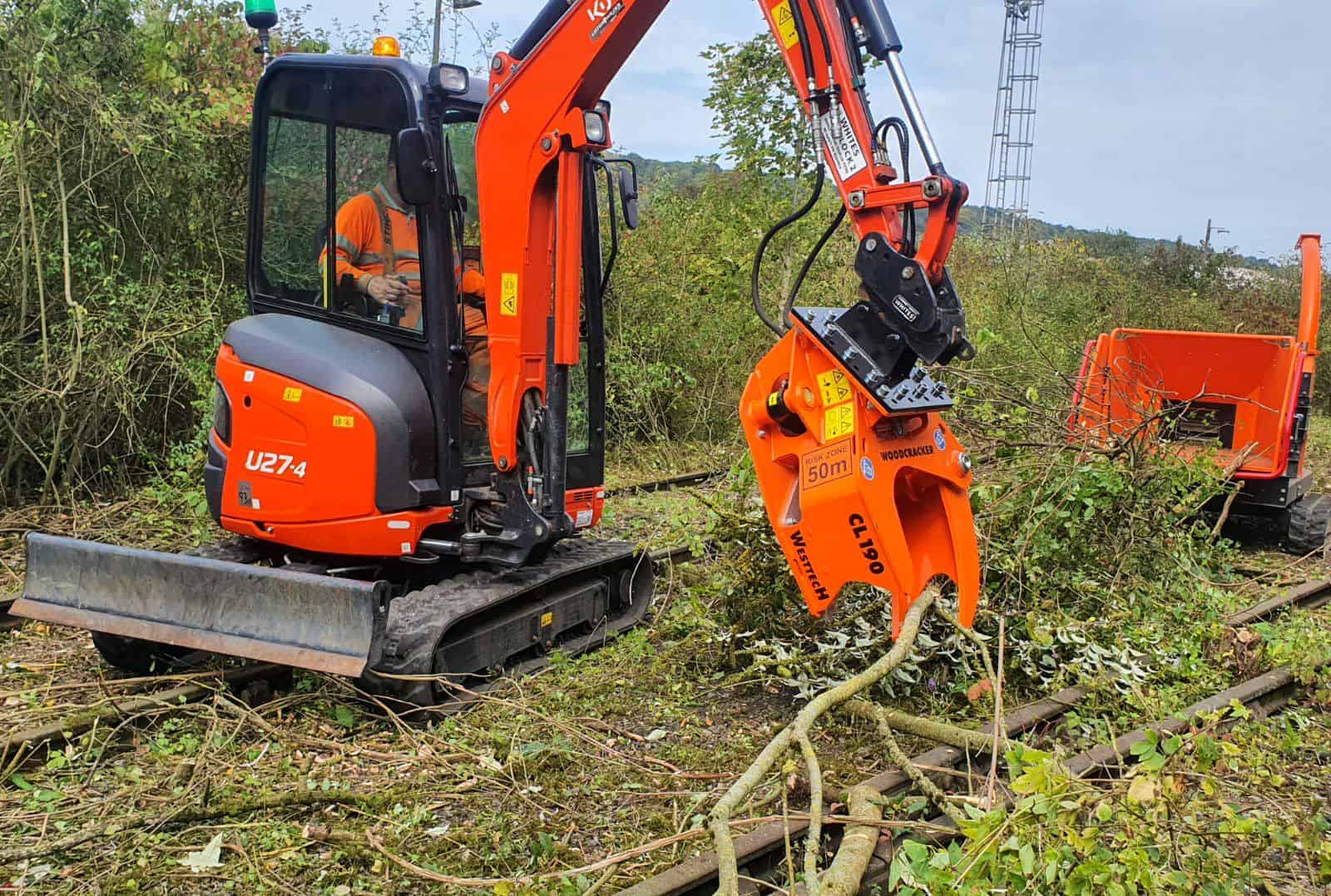
On our branch-line clearance project, we used excavator tree shears, mulching heads and robo flails around an embankment, underground pipelines and public access. The work followed detailed RAMS and ecological surveys supplied by the client.
For a clearance enquiry, tell us the site location, the vegetation to be cleared and any known access or ecological constraints. You can attach maps, plans and photographs to the enquiry form.

Why you can count on PB Forestry
Expertise you can trust
Years of experience and specialist machinery like the Sennebogen 718E set us apart.
Environmentally responsible
We use sustainable methods that protect and support the natural environment.
Holistically minded maintenance
From clearance to hydroseeding, we manage every stage of the project for you.
Advice from professionals
Our certified team works safely, professionally and to industry standards.
Vegetation Clearance Equipment: What We Use for Safe Management
Clearing vegetation takes strength, control and the right tools.
From forestry mulchers to low-ground-pressure machines, our equipment is designed to handle rough terrain and sensitive habitats with precision and care.
Discover more about the tools of our trade that our experts use to perform safe and efficient grounds maintenance here.
Related project experience
See how we have applied these methods and managed site constraints on completed projects.


Where we work
We deliver this service across mainland Britain from our bases in Warwickshire and Bristol. Choose a region to see the ground conditions and consents that apply there.
FAQs
Vegetation clearance involves removing unwanted, overgrown or invasive plant material, including scrub, brambles, small trees and dense undergrowth. It is a key part of land preparation for construction, infrastructure works or environmental projects. Whether you are starting a building project or restoring a neglected landscape, clearing the site is often the first and most essential step before anything else.
Vegetation clearance is essential for managing land and maintaining grounds safely and responsibly. It keeps public areas, such as paths, roads, and utility routes, open and accessible, while also reducing fire risks and allowing safe access for surveys and development. Crucially, it helps control invasive species and supports ecological restoration by giving native habitats the space and light they need to recover.
We use a range of specialised machinery depending on the land and the type of vegetation. This equipment allows us to clear land quickly, safely and with minimal impact. The most common machinery we use when performing vegetation clearance tasks includes: - Forestry mulchers to process thick brush and trees into mulch - Flail mowers for managing low vegetation like grass and scrub - Tree shears and excavator-mounted tools for tougher woody growth - Low ground pressure machines for sensitive or waterlogged ground
Yes, and they are essential to follow as this legislation protects wildlife and sensitive habitats. The Wildlife and Countryside Act 1981, for example, safeguards nesting birds, bats and certain plant species. Wild bird nests are protected while in use or being built, so clearance planning must consider active nests at any time of year. See our bird nesting season guide for timings and site checks. Clearance work near protected sites such as ancient woodland or Sites of Special Scientific Interest often requires additional permissions, as does work in conservation areas. By working with experienced contractors, you ensure that your project is carried out responsibly and legally from the outset.
When done without care, vegetation clearance can disturb wildlife, compact soil or strip away valuable habitat. However, responsible clearance is designed to avoid those risks. Our team carries out ecological checks before work begins and uses machinery that minimises pressure on the ground. We also plan around sensitive wildlife seasons and retain key habitat features wherever possible. With the right approach, clearance can enhance biodiversity and support the long-term health of the landscape.