Bird nesting season in the UK: dates, the law and what it means for tree and clearance work
The dates most people quote are guidance. The law protects the nest itself, in any month of the year. This guide sets out both, and how tree and clearance work is planned around them.
Main nesting season: 1 March to 31 August
Updated 30 September 2026
The dates
When the bird nesting season runs in the UK
There is no single set of dates. Government guidance for England gives the main nesting and breeding season as 1 March to 31 August, and birds do not keep to it exactly.
March
March
Main nesting season
The government's guidance for England puts the start of the main nesting and breeding season at 1 March. From here on, the working assumption is that birds are nesting in any hedge, tree or area of scrub.
On site
Work that can wait is held until autumn. Where work has to go ahead, the vegetation is checked first by a competent person.
- Main nesting season
- Early and late nesting
- Outside the main season
- January: Outside the main season
- Hedges and scrub are bare, so any nest is easy to see, and nesting activity is far lower than in spring and summer. The RSPB notes that some birds may start as early as January or February. A sound month for clearance and tree work. The vegetation is still checked before work starts, and older trees are assessed for roosting bats.
- February: Early and late nesting
- The last month before the main season. Early nesters may already be building, and the law protects a nest from the point it is being built, not from the point it holds eggs. Planned clearance is best completed now. On agricultural hedgerows in England, cutting and trimming must stop by the end of the month.
- March: Main nesting season
- The government's guidance for England puts the start of the main nesting and breeding season at 1 March. From here on, the working assumption is that birds are nesting in any hedge, tree or area of scrub. Work that can wait is held until autumn. Where work has to go ahead, the vegetation is checked first by a competent person.
- April: Main nesting season
- Nesting is well under way. The Arboricultural Association gives 1 March to 31 July as the busiest time for nesting birds. Essential work only, behind a check. Ground vegetation is checked as well as trees and hedges, because ground nesting birds are easily overlooked.
- May: Main nesting season
- The middle of the busiest period. Birds carrying nesting material or food into vegetation are the signs of breeding activity the RSPB advises looking for. Any sign of breeding is a reason to stop and check. Work next to an active nest waits until the nest is no longer in use.
- June: Main nesting season
- Still within the busiest period, with hedges and scrub in full leaf. A nest deep in summer growth is far harder to see from outside than one in a bare winter hedge. Checks take longer in dense growth. Time for them is built into the programme and the findings are recorded.
- July: Main nesting season
- The last month of the busiest period given by the Arboricultural Association. Nests remain in use: the British Trust for Ornithology puts the woodpigeon's main nesting period at April to October. The same controls apply as in spring. This is the point to fix the scope and dates of autumn clearance.
- August: Main nesting season
- The final month of the main season in the government's guidance. Activity is falling, and late nests are still protected for as long as they are in use. The closed period for cutting agricultural hedgerows in England ends on 31 August. Autumn programmes are confirmed now.
- September: Early and late nesting
- The government's guidance treats the main season as over. The RSPB counts September within it, and notes that some birds breed late into the month. Work generally resumes, with a check first. An active nest found in September is protected exactly as it would be in May.
- October: Outside the main season
- Outside the main season. The woodpigeon's main nesting period runs into October, so the occasional active nest is still possible. The start of the main working window for vegetation clearance, which runs through the winter.
- November: Outside the main season
- Leaf fall opens up hedges and scrub, and nesting activity is far lower than in spring and summer. A core month for clearance and tree work ahead of construction starts in spring.
- December: Outside the main season
- Outside the main season, though winter is not free of wildlife constraints. Bat roosts are protected whether or not bats are present, and hibernation is a sensitive period. Tree work continues. Older trees that could hold a bat roost are assessed before they are felled.
Why the dates differ from one source to the next
The dates describe when most birds nest. They are not written into the legislation, so each body draws the line in a slightly different place. All three agree on the core of the season. They differ at the edges, which is why the dial above shades February and September separately.
Natural England and Defra
1 March to 31 August
The main nesting and breeding season, as given in government guidance for England.2
RSPB
March to September
The main nesting season, with a recommendation to cut only between 1 September and 28 February.3
Arboricultural Association
1 March to 31 July
The busiest time for nesting birds. The association adds that nesting may start earlier and run later.4
When the nesting season ends, and the birds that ignore it
On the government's dates the main season ends on 31 August.2 The RSPB runs it to the end of September and notes that some birds start as early as January or February.3
Some species sit outside any of these ranges. The British Trust for Ornithology describes the woodpigeon as a species that can nest at any time of the year,5 with a main nesting period between April and October.6 A woodpigeon on eggs in a site boundary tree in November is unusual, and it is protected.
A nest is protected while it is in use or being built. No dates appear in the offence.
The law
What the law protects, in season and out
The Wildlife and Countryside Act 1981 does not define a nesting season. It protects the bird, the nest and the egg, and the protection follows the nest, not the calendar.
“takes, damages or destroys the nest of any wild bird while that nest is in use or being built”
This is section 1(1)(b) of the Wildlife and Countryside Act 1981. In England and Wales it is an offence to do this intentionally.1 The wording carries no dates. A nest being built in February, or still in use in September, is protected in exactly the same way as one found in May.
“kills, injures or takes any wild bird … takes or destroys an egg of any wild bird”
“disturbs any wild bird included in Schedule 1 while it is building a nest or is in, on or near a nest containing eggs or young”
“intentionally or recklessly … takes, damages, destroys or otherwise interferes with the nest of any wild bird while that nest is in use or being built”
The version of section 1 that applies in Scotland is wider than the one for England and Wales. It covers reckless acts, interference with a nest, and obstructing or preventing a bird from using its nest.1 The Wildlife (Northern Ireland) Order 1985 is drafted in similar terms.8 In both, a person who knowingly causes or permits an offence commits one, which matters to whoever instructs the work as well as whoever carries it out.
“You could get an unlimited fine and up to 6 months in prison for each offence if you’re found guilty.”
That is the government's statement of the position in England.7 Under section 21 of the Act the maximum fine is worked out as if there were a separate conviction for each bird, nest or egg, and the court may order the forfeiture of any vehicle or other thing used to commit the offence.9 The maximum penalties in Scotland are higher.
No licence for development or construction
A common assumption is that a licence can be obtained to remove an active nest so that a job can carry on. For development it cannot. The government's guidance states that there are no licensing purposes to permit development or construction.7 Licences exist for a limited list of other purposes, which include preserving public health and safety and preserving air safety.13
Planning permission does not change the position either. Natural England's advice to planning authorities is that the developer must comply with the legal protection of all wild birds.13
What a wild bird licence can be issued for
- Preserving public health and safety
- Preserving air safety
- Work for science, education or research
- Preventing damage to crops or animal feed
- Conserving plants and animals, including other wild birds
- Preventing damage to fisheries
- Photography, falconry, keeping or breeding birds
Development and construction are not on the list.
On site
What nesting season means for tree work and clearance
Work during the season is not banned outright. In the Forestry Commission's words, it is not always illegal to fell during the bird nesting season, but precautions must be taken by law.
The Forestry Commission's guidance goes on to say that work must be planned so that protected species are not intentionally harmed and their nests are not damaged or destroyed.10 In practice that comes down to two things: when the work is programmed, and what a check of the vegetation finds before it starts. Set both below to see where a job stands.
Check first
Nothing is cut until the vegetation has been checked
In the main season the Arboricultural Association's rule is that it should be assumed birds will be nesting in trees, and that a survey before the works needs to be carried out by a suitably competent person.4 Where the work sits under a planning permission, a condition may require that person to be an ecologist.
Proceed with controls
The work can go ahead, and the check is recorded
Work in the season is not banned outright. Somerset Council's guidance is that works can take place as long as a thorough inspection has been made by a qualified specialist before they start,11 and the Forestry Commission advises keeping records of surveys and of the decisions taken.10 The operators stay alert while the work is under way, and stop if a nest comes to light.
Stop in that area
Work around the nest waits until it is no longer in use
The RSPB's advice is direct: continuing work after becoming aware of active nests is an offence.12 There is no licence to remove the nest so that development or construction can continue.7 Work stops in that area, the nest is protected, and the rest of the site is reprogrammed around it. The next chapter sets out the sequence.
Check, then proceed
The right time of year, and still worth a check
This is the period the RSPB recommends for cutting. It also recommends still checking for nesting birds, because some start early in January or February or breed late into September,3 and the woodpigeon can nest at any time of the year.5 A check before work starts takes little time in bare vegetation.
Work can proceed
The preferred window, with the check already made
The government's guidance is that in most cases harm to wild birds can be avoided by timing work to avoid the breeding season.7 Winter brings its own constraint for tree work: bat roosts are protected including when bats are not present, so trees that could hold a roost are assessed before they are felled.16
Stop in that area
The nest is protected whatever the month
The offence is tied to a nest that is in use or being built, not to the calendar.1 An active nest found in October or February is treated exactly as one found in May: work stops in that area until the nest is no longer in use.
Three other rules that can apply
Planning conditions
A planning permission can carry its own restriction. One council's condition reads: “No vegetation clearance shall take place during the bird nesting season (01 March to 31 August, inclusive) unless the developer has been advised by a suitably qualified ecologist that the clearance will not disturb nesting birds and a record of this kept.”14
Agricultural hedgerows
The one true calendar ban is narrow. In England, a hedgerow growing on or next to agricultural land must not be cut or trimmed from 1 March to 31 August. There are exemptions, including for safety on highways and footpaths, and none of them overrides the 1981 Act.15
Netting
Netting a hedge or tree to keep birds out ahead of the season is not the answer. Natural England's advice to planning authorities on blocking access to nest sites is plain: do not use netting or spikes.13
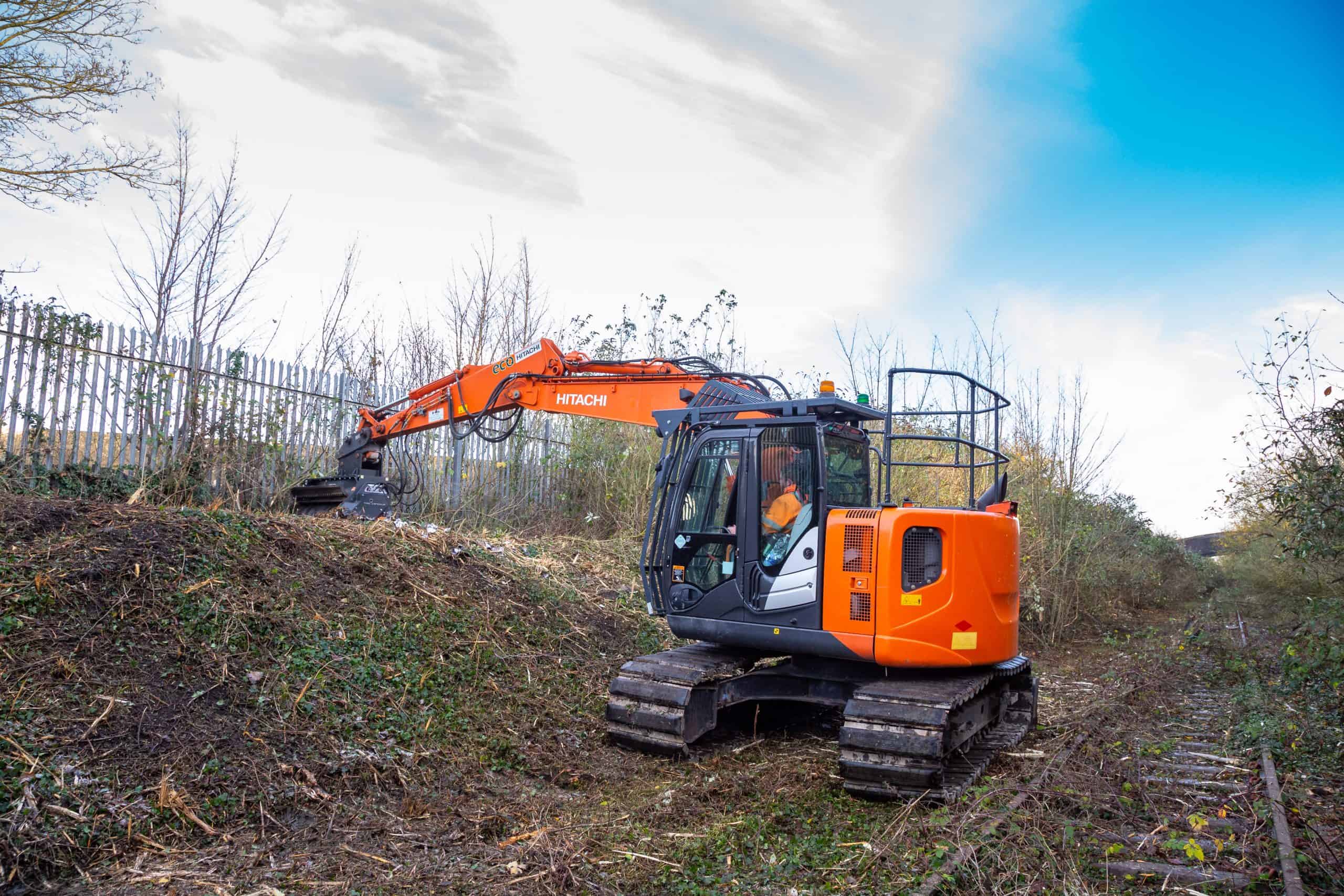
Rail, highway and utility corridors
Linear infrastructure brings the question up every year, because the vegetation is continuous and the safety case for managing it does not pause in spring. Network Rail has described its own approach as scaling back vegetation management in the nesting season to work that is essential to keep the railway running safely and reliably, and checking for nesting birds before any work starts.17
The closed period for agricultural hedgerows has an exemption for work carried out by a statutory body acting under statutory powers, such as a utility company. The exemption applies to the hedgerow rules only, and the 1981 Act still has to be followed.15
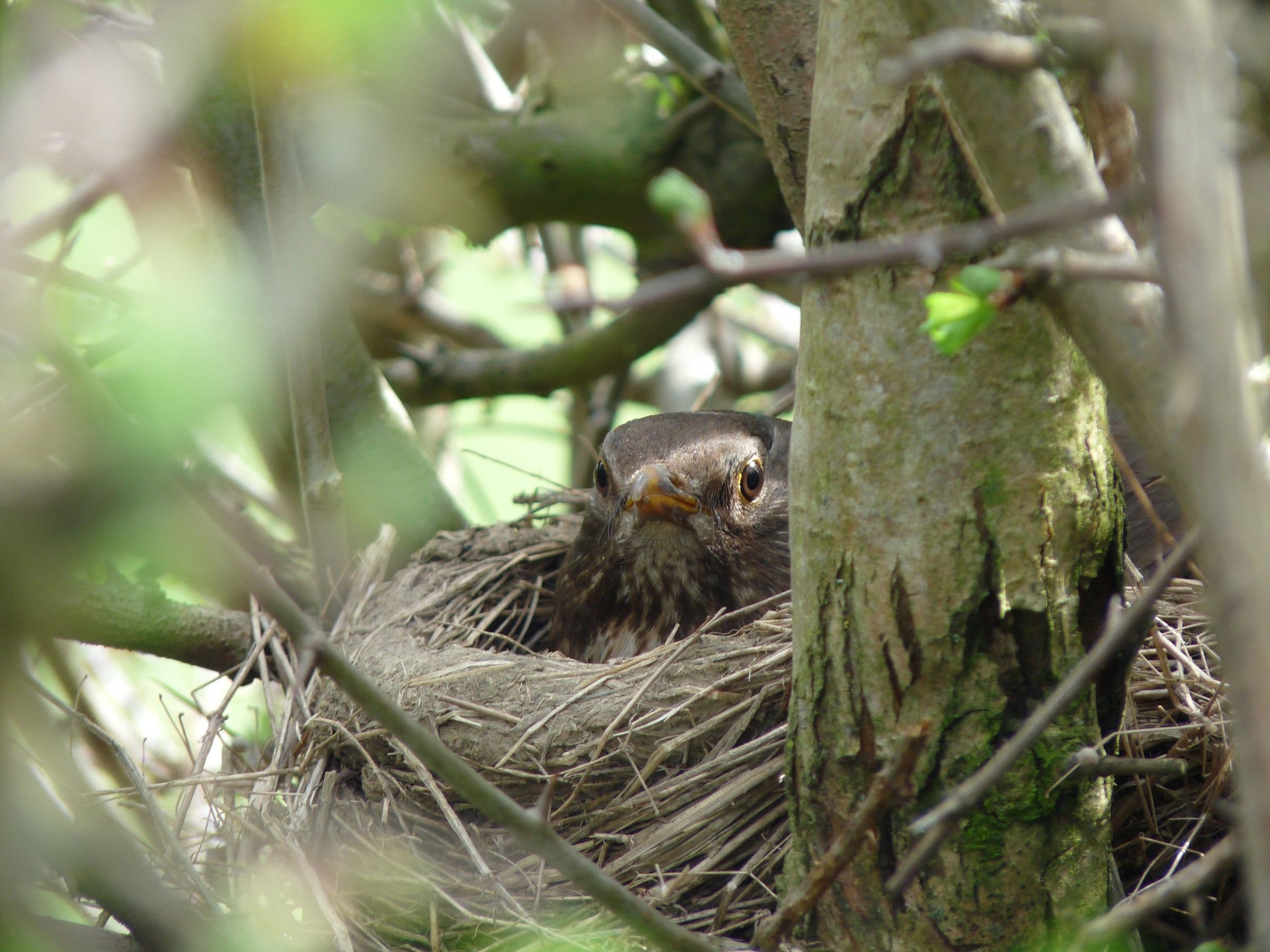
From the moment an active nest is known about, the work around it stops.
A nest on site
When an active nest is found during work
Checks reduce the chance of finding a nest part way through a job. They do not remove it. The sequence from that point is short and does not vary much from site to site.
Step 1 of 4
Stop work in that area
From the moment an active nest is known about, carrying on is an offence.12 Machinery and saws stop in the affected area and the find is reported to whoever is managing the site.
Step 2 of 4
Protect the nest
An exclusion zone is set around the nest and marked so that it holds for every operative and every shift. Natural Resources Wales describes applying appropriate buffer distances from nests during sensitive periods as an important way to avoid unnecessary harm.18 The right distance depends on the species and the site, which is a judgement for an ecologist.
Step 3 of 4
Wait until the nest is no longer in use
Step 4 of 4
Record it, then resume
Once the nest is confirmed as no longer in use, work in the area restarts. The Forestry Commission advises keeping records of any surveys undertaken and of the decisions made on how and when the work is done,10 and that record is what shows the job was handled properly.
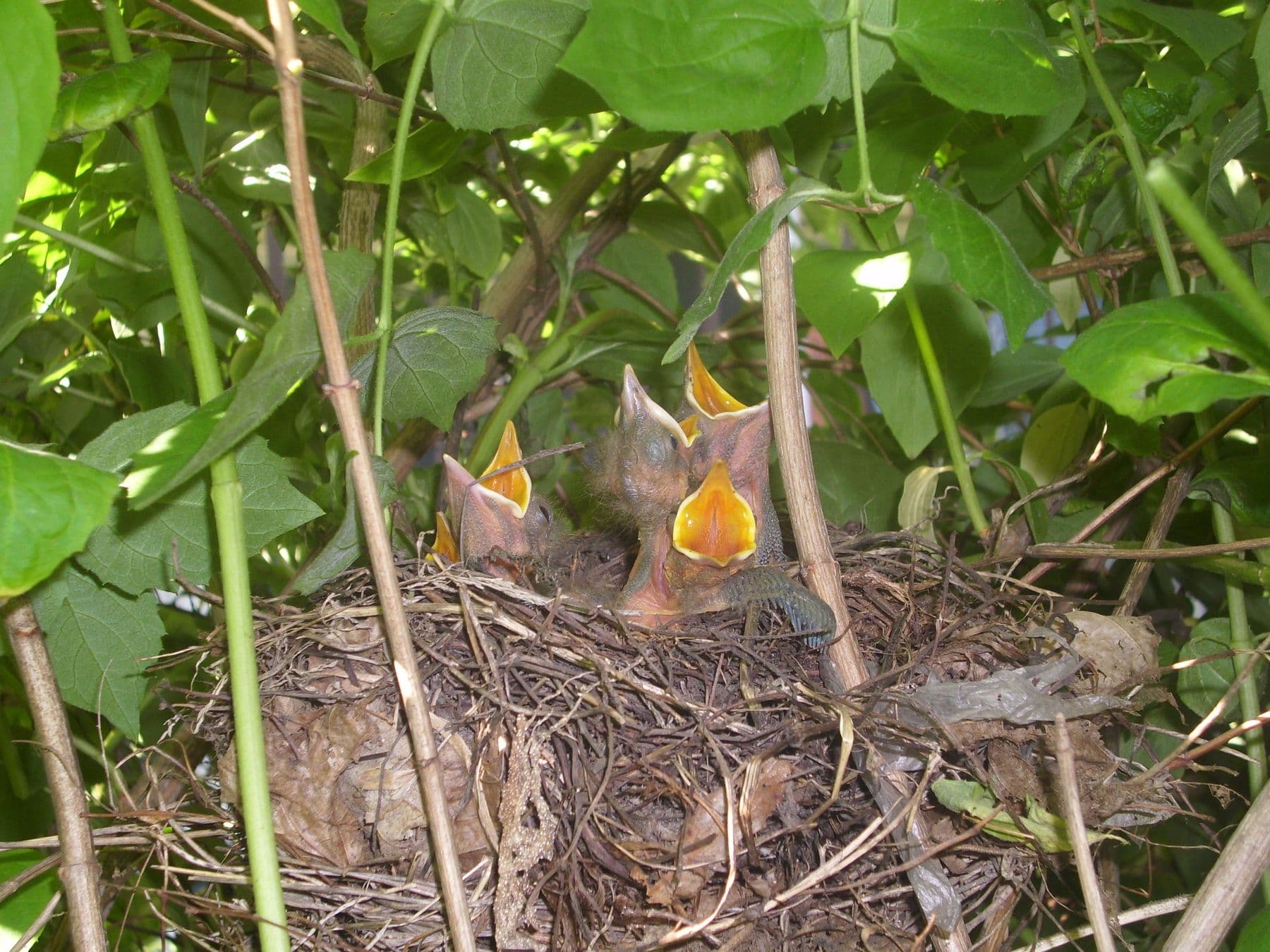
A nest that is no longer in use
The protection in section 1 applies to a nest while it is in use or being built.1 In England and Wales the exceptions are the golden eagle, the white-tailed eagle and the osprey, whose nests are protected all year round because the birds reuse them.18 For every other species, whether a nest is still in use is a question of fact, and on a working site it is answered by the person who made the check, not assumed by the operator.
Planning ahead
Planning a clearance programme around nesting season
The simplest way to keep a project clear of the season is to clear the site before it starts. That decision is made months earlier than most programmes allow for.
Natural England's advice on avoiding harm to wild birds includes doing the works at a different time of year, and removing habitat features when they are not being used by birds, such as before the nesting season.13 For a construction start in spring or summer, that means vegetation clearance and site clearance between autumn and the end of February, with tree work programmed into the same window.
PB Forestry take ecology into account for all clearance work we undertake, with work only taking place when permitted and within the ecological constraints. Our team carries out ecological checks before work begins, and we plan around sensitive wildlife seasons and retain key habitat features wherever possible.
Where a site needs surveys or mitigation before clearance, our ecological services cover protected species and habitat surveys. Tree removal is carried out by tree surgery teams or, where the site allows, by mechanical tree surgery.
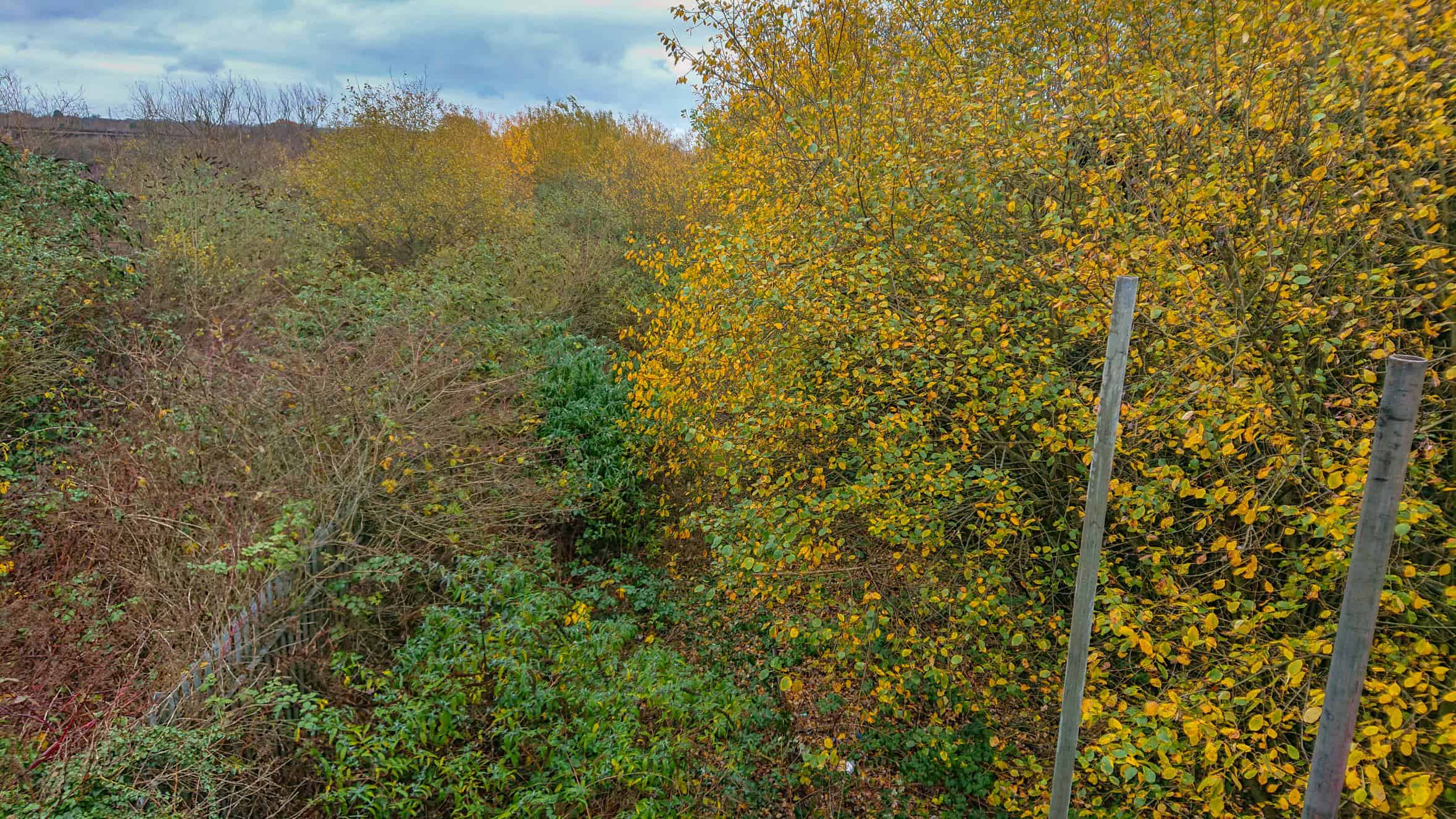
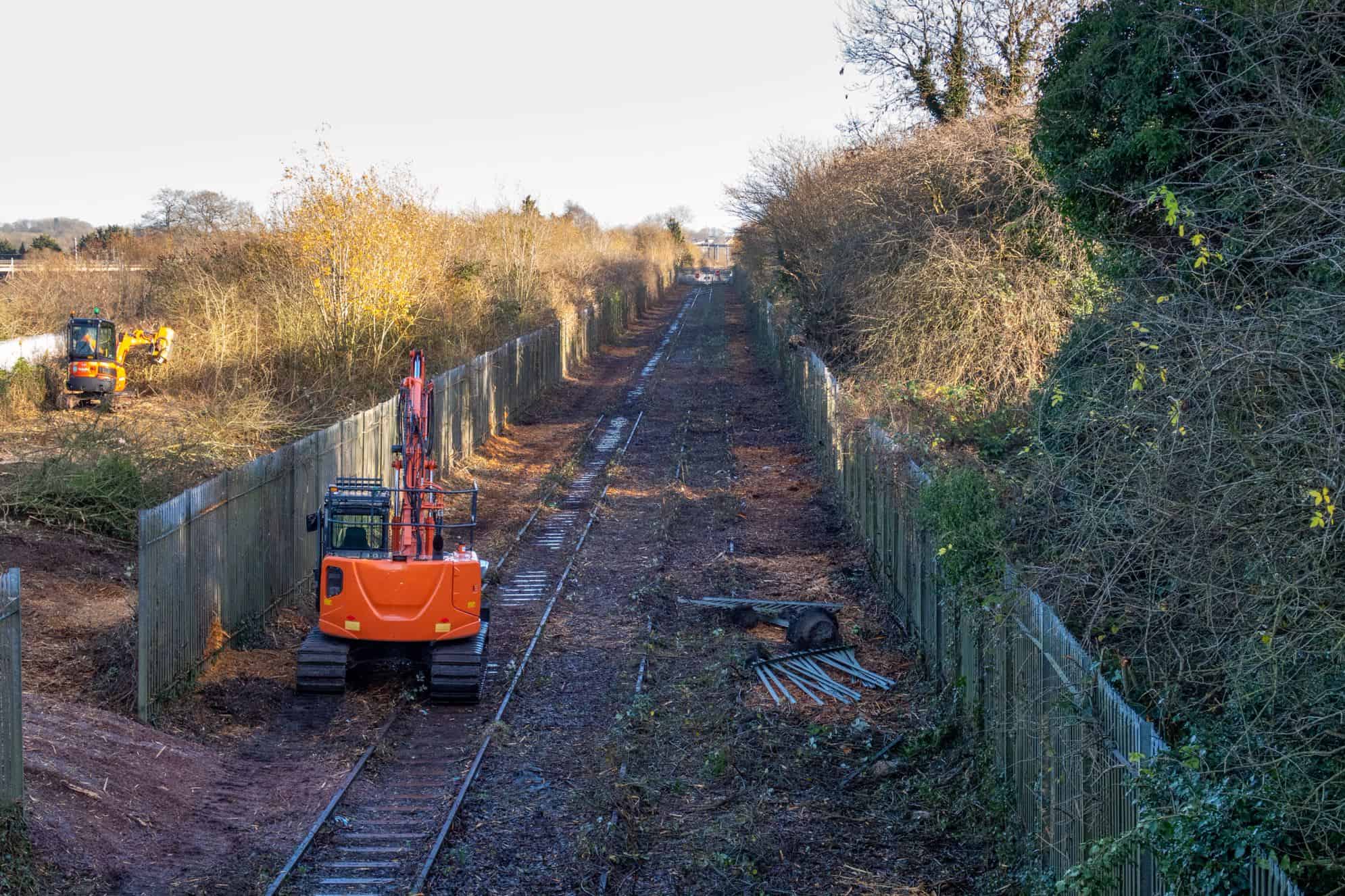
Clearance with ecological constraints, in practice
On a rail restoration project, PB Forestry cleared 700m of disused and overgrown branch line beside a quarry face and underground pipelines. Ecological surveys were carried out by the client before clearance started, and our team worked to a detailed set of risk assessments and method statements. Excavators with tree shears and mulching heads did the clearance, with a mini digger on the embankments.
Read the case studyRelated guide
Ash dieback: stages, symptoms and what landowners have to do
Diseased ash beside a road or path is one reason tree work sometimes cannot wait for winter. Our guide covers how the disease progresses and what the law expects of the owner.
Read the guideThe short version
Bird nesting season and site work in six points
The main nesting and breeding season in government guidance for England runs from 1 March to 31 August. Other bodies extend it into September.
The law sets no season. It protects any wild bird's nest while it is in use or being built, in every month of the year.
Tree work and clearance in the season are not banned outright, but the vegetation is checked first by a competent person and the check is recorded.
Once an active nest is known about, work in that area stops until the nest is no longer in use. There is no licence to remove it for development.
Hedgerows on or next to agricultural land in England have a closed period for cutting and trimming, from 1 March to 31 August.
The dependable way to stay clear of all of it is to programme clearance between autumn and the end of February.
Sources
This guide is general information and is not legal advice. Every statement of law or official guidance above is drawn from the sources listed here, last checked on 30 September 2026. Legislation and guidance change, so confirm the current position before relying on it.
- 1legislation.gov.uk, Wildlife and Countryside Act 1981, section 1
- 2Natural England and Defra, Countryside hedgerow protection: removing hedgerows
- 3RSPB, Birds' nests and nestboxes
- 4Arboricultural Association, When is the bird nest season
- 5British Trust for Ornithology, BirdFacts: Woodpigeon
- 6British Trust for Ornithology, Garden BirdWatch factsheet: Woodpigeon
- 7Natural England and Defra, Wild birds: protection and licences
- 8legislation.gov.uk, Wildlife (Northern Ireland) Order 1985, article 4
- 9legislation.gov.uk, Wildlife and Countryside Act 1981, section 21
- 10Forestry Commission, Tree felling: getting permission
- 11Somerset Council, Bird nesting season guidance
- 12RSPB, How to report crimes against wild birds
- 13Natural England, Wild birds: advice for making planning decisions
- 14Rushmoor Borough Council, Development Management Committee reports pack, 13 April 2022 (condition 12)
- 15Rural Payments Agency, Hedgerow management rules: cutting and trimming
- 16Natural England, Bats: advice for making planning decisions
- 17Network Rail, Managing railways and habitats (2018)
- 18Natural Resources Wales, Consider protected species during forest operations
- 19West Oxfordshire District Council, Biodiversity specification 1: precautionary method of working
Photograph credits
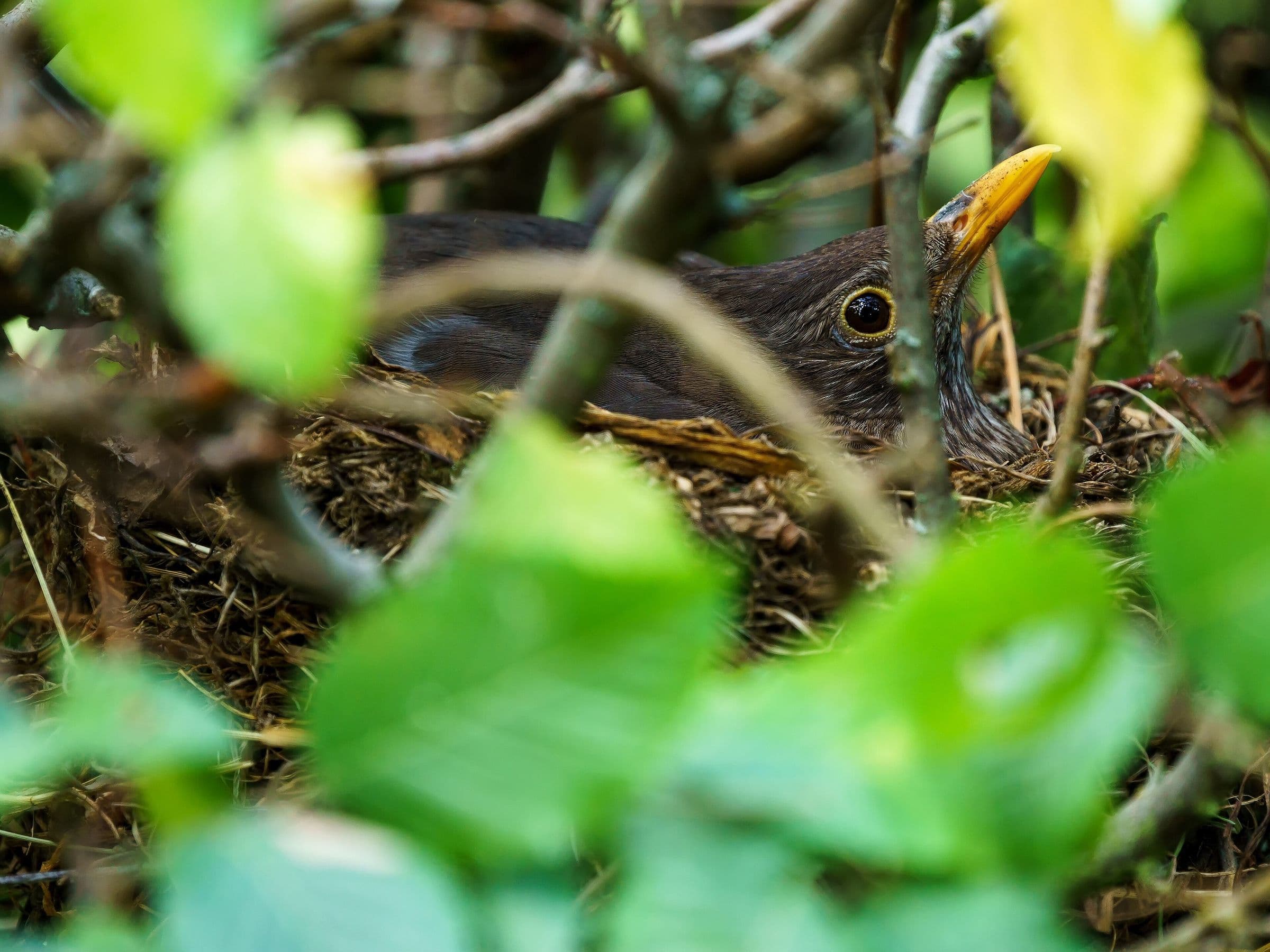
- Female blackbird sitting on her nest, seen through the leaves of a hedge. Photo: Radler59, CC BY-SA 4.0, via Wikimedia Commons
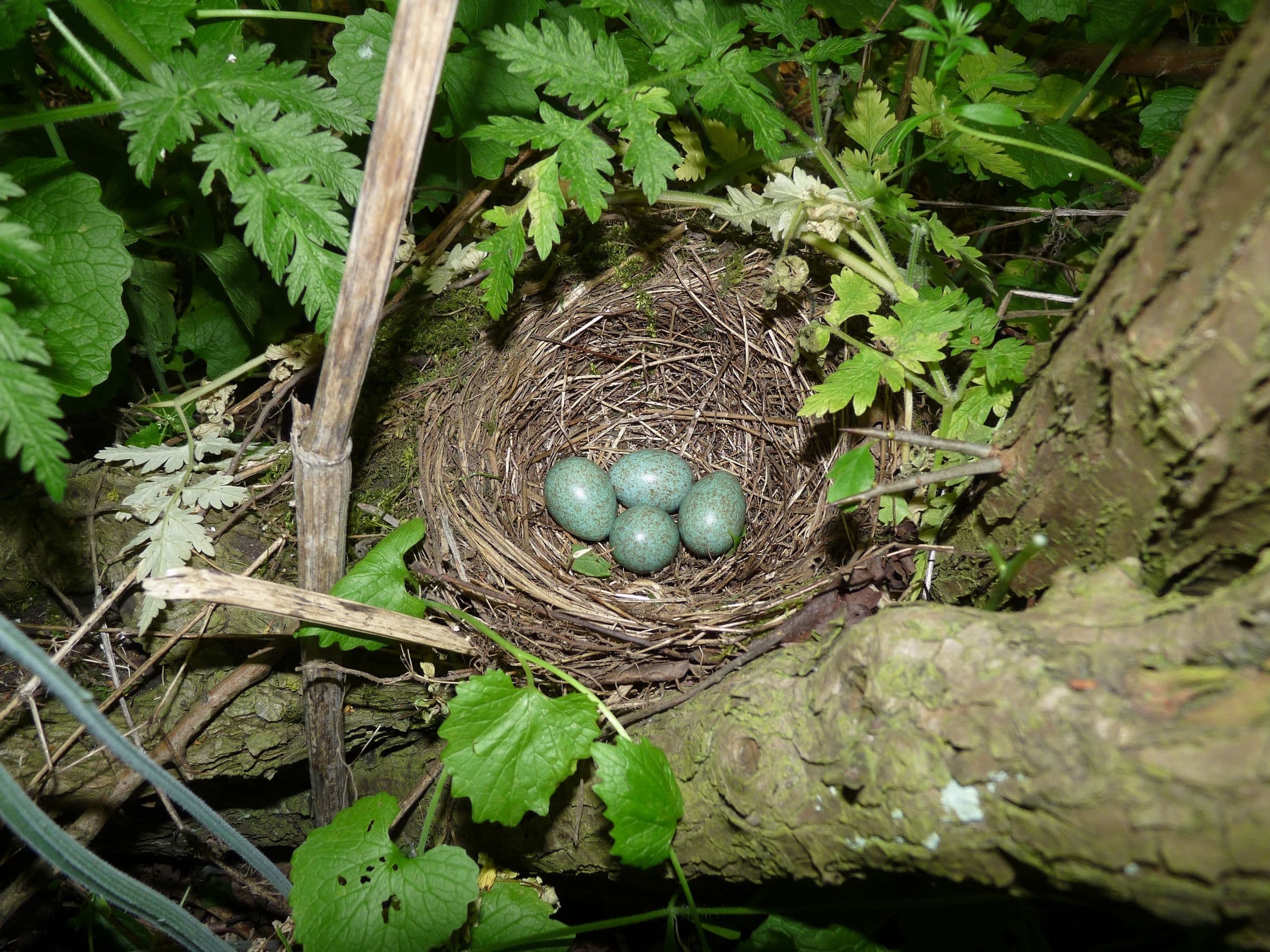
- Blackbird nest holding four eggs in the fork of a hedge. Photo: nottsexminer, CC BY-SA 2.0, via Wikimedia Commons
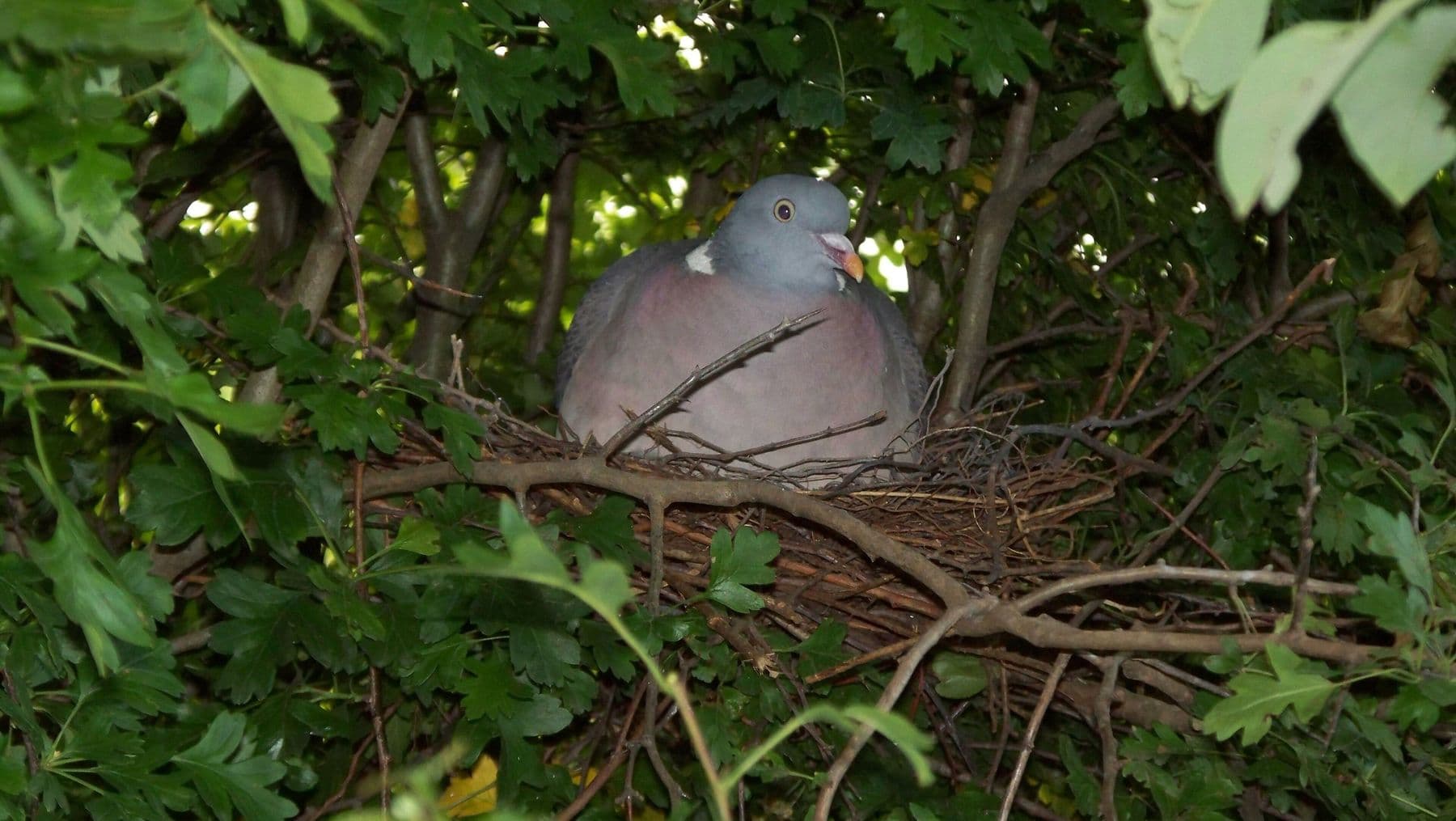
- Woodpigeon sitting on its nest in a hawthorn. Photo: nottsexminer, CC BY-SA 2.0, via Wikimedia Commons
- Blackbird on its nest among the stems of a hedge. Photo: nottsexminer, CC BY-SA 2.0, via Wikimedia Commons
- Blackbird chicks with open beaks in a nest in a shrub. Photo: Trachemys, CC BY-SA 3.0, via Wikimedia Commons
These photographs have been resized and cropped to fit the layout. All other photographs are PB Forestry's own.
Get in touch today
Companies we have worked with