Tree Preservation Orders: how to check a tree and what permission felling needs
Felling a tree in England can involve two regulators, several different clocks and a list of exceptions that are read narrowly. This guide works out which of them apply to a particular tree, and counts back from the day work is due to start.
Updated 15 October 2026
What is protected
What a Tree Preservation Order protects and how to check for one
A Tree Preservation Order is made by the local planning authority to protect specific trees, groups of trees or woodlands in the interests of amenity. Without written consent, most work on the tree is an offence.
Any size
Protected trees can be of any size or species
An Order covers specific trees, groups of trees or woodlands in the interests of amenity. A shrub would not normally qualify, but trees in a hedge can.1
6 acts
Prohibited without written consent
Cutting down, topping, lopping, uprooting, wilful damage and wilful destruction. The Secretary of State's view is that cutting roots is prohibited too.1
Same day
An Order takes effect the day it is made
This provisional protection lasts for 6 months, unless the authority confirms the Order or decides not to confirm it before then.1
How to find out whether a tree is protected
The authority makes a copy of each confirmed Order available for public inspection at its offices.1 Four checks settle the question for a particular tree.
Step 1 of 4
Search the council's map
Many authorities publish a map of protected trees. Treat it as a starting point. Buckinghamshire Council says that its search is for guidance only and should not be used as confirmation that a tree is protected.9
Step 2 of 4
Ask the local planning authority
Step 3 of 4
Check the conservation area separately
A tree with no Order on it can still be protected. Trees in a conservation area that are not covered by an Order are protected by section 211 of the Town and Country Planning Act 1990, which has its own notice procedure.1
Step 4 of 4
Check again before work starts
An Order comes into effect on the day the authority makes it,1 and a notice of work in a conservation area can itself prompt one. A check made when a job was priced may not hold on the day the machine arrives.
An Order does not transfer the responsibility for the tree
Owners remain responsible for maintaining their trees, and the authority cannot require work simply because a tree is protected.1 Anyone can apply for consent. The applicant will usually be the owner, or an arboricultural contractor or other person acting as their agent.1
Removing a countryside hedgerow is a separate matter, regulated under different legislation.1, 10 This guide covers England. Scotland, Wales and Northern Ireland regulate tree work under their own rules.
An Order and a felling licence are separate controls with separate exceptions. Clearing one does not clear the other.
The permission finder
Which permission the work on a tree needs
The local planning authority protects trees for amenity. The Forestry Commission controls the felling of growing trees. Answer the questions below to see where each of them stands on this tree and this work.
Size and volume
The size limits, and the one regime without any
Small stems fall outside the conservation area and felling licence rules, each measured at a different height. An Order has no such limit. The gauge below shows where a stem falls.
Dashed rings mark the limits in millimetres. Drawn in proportion, not to life size.
120 mm
across the stem, over the bark, or about 377 mm around it with a tape
Tree Preservation Order
No size limit
Protected at any size
Conservation area notice
Measured over the bark at 1.5 m
Notice needed
Felling licence size exception
Measured over the bark at 1.3 m
Excepted if coppice stems
- Tree Preservation Order. No size limit.
- Above that: Protected at any size
- Conservation area notice. Measured over the bark at 1.5 m.
- Up to 75 mm: No notice needed
- Up to 100 mm: No notice if thinning only
- Above that: Notice needed
- Felling licence size exception. Measured over the bark at 1.3 m.
- Up to 80 mm: Excepted
- Up to 100 mm: Excepted if thinning
- Up to 150 mm: Excepted if coppice stems
- Above that: No size exception
Conservation area limits are set by regulation 15, and a multi-stemmed tree is over the limit if any one of its stems is.5 Felling licence limits are from the Forestry Commission.2 Protected trees can be of any size.1
The 5 cubic metre allowance
In any calendar quarter, up to 5 cubic metres of growing trees may be felled on a property without a licence, as long as no more than 2 cubic metres are sold. The allowance applies within the immediate property or holding, and a Woodland Officer can confirm whether more than one count applies to separate properties.2
The Forestry Commission gives no tree count for 5 cubic metres. Volume in a standing tree is assessed from the wood in the main stems where they are over 8 cm in diameter over bark, and for large broadleaved trees that includes major branches.2 A single mature tree can use up a large part of the allowance, so the volume is assessed before felling starts.
The quarters the allowance runs on
- 1 January to 31 March
- 1 April to 30 June
- 1 July to 30 September
- 1 October to 31 December
Felling 5 cubic metres in successive quarters is where records matter most. The Forestry Commission strongly encourages keeping evidence of what was felled and when.2
Timescales
How long each route takes, counted back from the start date
Three of these four routes are measured in weeks or months, which makes them programme items. Enter the date work is due to start to see when each one has to be submitted.
Felling licence: 3 months
The legal timescale runs from a complete application. If an application is incomplete or incorrectly mapped it is returned, and the 3 months start again on resubmission.2
Consent under an Order: 8 weeks
The 8 weeks are the point at which an appeal for non-determination becomes possible. The authority may still decide later, and work cannot start until consent is granted.1
Section 211 notice: 6 weeks
The work may go ahead sooner if the authority gives its permission. Notice should be given no more than 2 years before the work.1, 2
Dead tree notice: 5 working days
Written notice to the authority before the work.4 This calculator skips weekends and does not know about bank holidays, so allow for those.
What the authority can do with a section 211 notice
A section 211 notice is not an application for consent, so the authority cannot refuse it or grant it subject to conditions. It has three options.1
It makes an Order
If justified in the interests of amenity, preferably within 6 weeks of the date of the notice. The work then needs consent in the ordinary way.1
It says the work can go ahead
The authority decides not to make an Order and tells the person who gave notice. The work may go ahead before the 6 weeks are up.1
It lets the period end
The authority decides not to make an Order and the 6 weeks pass. The proposed work may then be done within 2 years of the date of the notice.1
What makes an application or notice work
The guidance is the same for both: be clear about what is proposed. An application needs the standard form, a plan that clearly identifies the tree, a description of the work, the reasons for it and, where relevant, evidence of structural damage or of the tree's health or safety. Proposals to remove a tree should include replacement planting.1
A section 211 notice has no required form, but it must describe the work, identify the tree and carry the date it was submitted. One notice can cover several trees or a programme of phased work, which avoids repeat notices on a large site.1
A potential applicant may wish to discuss the proposal informally with the authority first.1
For a felling licence exception, the burden of proof rests with whoever relies on it. The evidence is gathered before the first cut.
Exceptions
The exceptions, and how narrowly they are read
Tree owners, their agents and contractors should take care not to exceed an exception. Before relying on one, the guidance suggests advice from a qualified arboriculturist or confirmation from the authority.
A dead tree needs notice, and dead branches on a living tree do not
Unless the work is urgently necessary, 5 working days' prior written notice must be given before cutting down or carrying out other work on a dead tree. Dead branches can be removed from a living tree without prior notice or consent.1
The guidance also asks owners to consider biodiversity: safety has priority, but it may not require the removal of all the dead branches on a living tree or the whole of a dead one.1
The risk has to be serious, and it has to be now
The Secretary of State's view is that there must be a present serious safety risk. It need not come from disease or damage: the state of the tree, its size and its position can be enough. One consideration is what is likely to happen, such as injury to a passing pedestrian.1
If the danger is not immediate, the tree does not come within the exception. Work should go only as far as is necessary to remove the risk.1
Disease alone does not remove the need for consent
The authority's consent is needed for work on diseased or dying trees unless some other exemption applies, such as an immediate risk of serious harm or a notice served under plant health legislation.1 The Forestry Commission's position on licences is the same: there is no general exception for diseased trees.2
Our guide to ash dieback sets out how this applies to the disease most tree owners are now dealing with.
Nuisance means actual damage, or an immediate risk of it
Consent is not required for the minimum of work necessary to prevent or abate a nuisance, but the word is used in its legal sense. The courts have held that the nuisance must be actionable in law, where it is causing, or there is an immediate risk of it causing, actual damage.1
Steps other than tree work should be considered first. The guidance gives engineering solutions for structural damage to buildings as an example.1
The two regimes treat planning permission differently
Under an Order, the exception covers work necessary to implement a full planning permission, and it does not extend to permitted development.1 For a felling licence, the exception does include felling immediately required for permitted development.2
Neither covers outline permission on its own. For a licence, permission granted after the felling does not undo an offence.1, 2
Work on operational land, for defined purposes
The regulations except work by or at the request of a statutory undertaker on its operational land where it is needed for safe operation or to maintain its apparatus. The term includes railway operators, electricity licence holders, gas transporters, communications network operators and water and sewerage undertakers.4
Undertakers are still advised to liaise with local authorities before carrying out work.1
Fruit grown as a business, and pruning to good practice
The record to keep before relying on one
For felling licence exceptions, the Forestry Commission advises photographs with reference to scale, showing the setting and condition of the tree before and after felling, along with maps, surveys or reports, inspection checklists and a record of when the felling took place. The evidence should be specific to each site and each exception claimed, and exceptions cannot be applied retrospectively.2
Getting it wrong
What unauthorised work can lead to, and for whom
The offences reach further than the person holding the saw. Under an Order they cover anyone who causes or permits the work, and under the felling rules penalties can apply to each person involved.
Under an Order
It is an offence to cut down, uproot or wilfully destroy a tree, to damage, top or lop it in a way likely to destroy it, or to cause or permit any of those. The Act sets no upper figure for the fine, and the court has regard to any financial benefit from the offence.6 A tree does not have to be obliterated: it is enough for it to be rendered useless as an amenity.1
In a conservation area
Work without a section 211 notice is an offence and carries the same penalties. Lesser contraventions of an Order, such as lopping that is not likely to destroy the tree, carry a fine of up to level 4, which the guidance gives as £2,500.1, 6
Without a felling licence
Felling licensable trees without a licence is an offence. On conviction, the fine is currently unlimited and can apply to each person involved, for example the owner, agent, timber merchant or contractor. A restocking notice can also compel replanting.2
The replacement tree stays with the land
A landowner has a duty to replace a tree removed in contravention of an Order, with one of an appropriate size and species. That duty transfers to the new owner if the land changes hands. The authority can enforce it with a tree replacement notice, served within 4 years of the failure to replant, and it can plant the tree itself and recover its reasonable expenses.1
Those who help can be liable too. Anyone who aids, abets, counsels or procures an offence may be, and so may company directors and managers where it was committed with their consent or connivance or through their neglect.1
Where PB Forestry come in
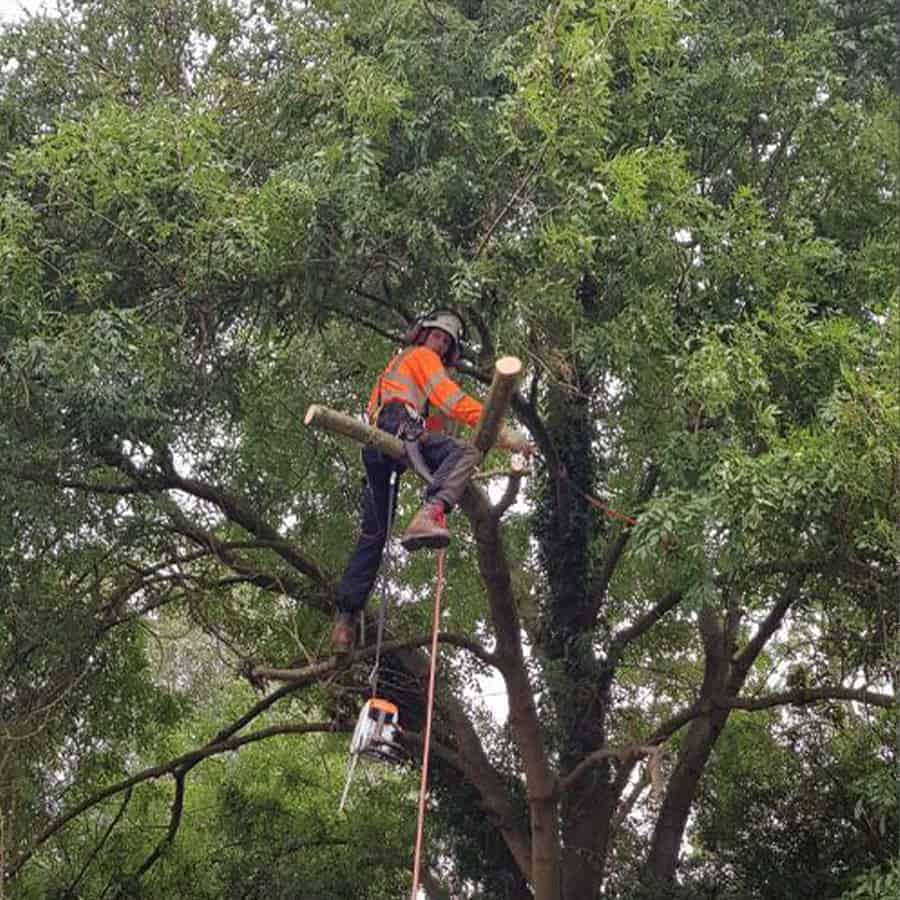
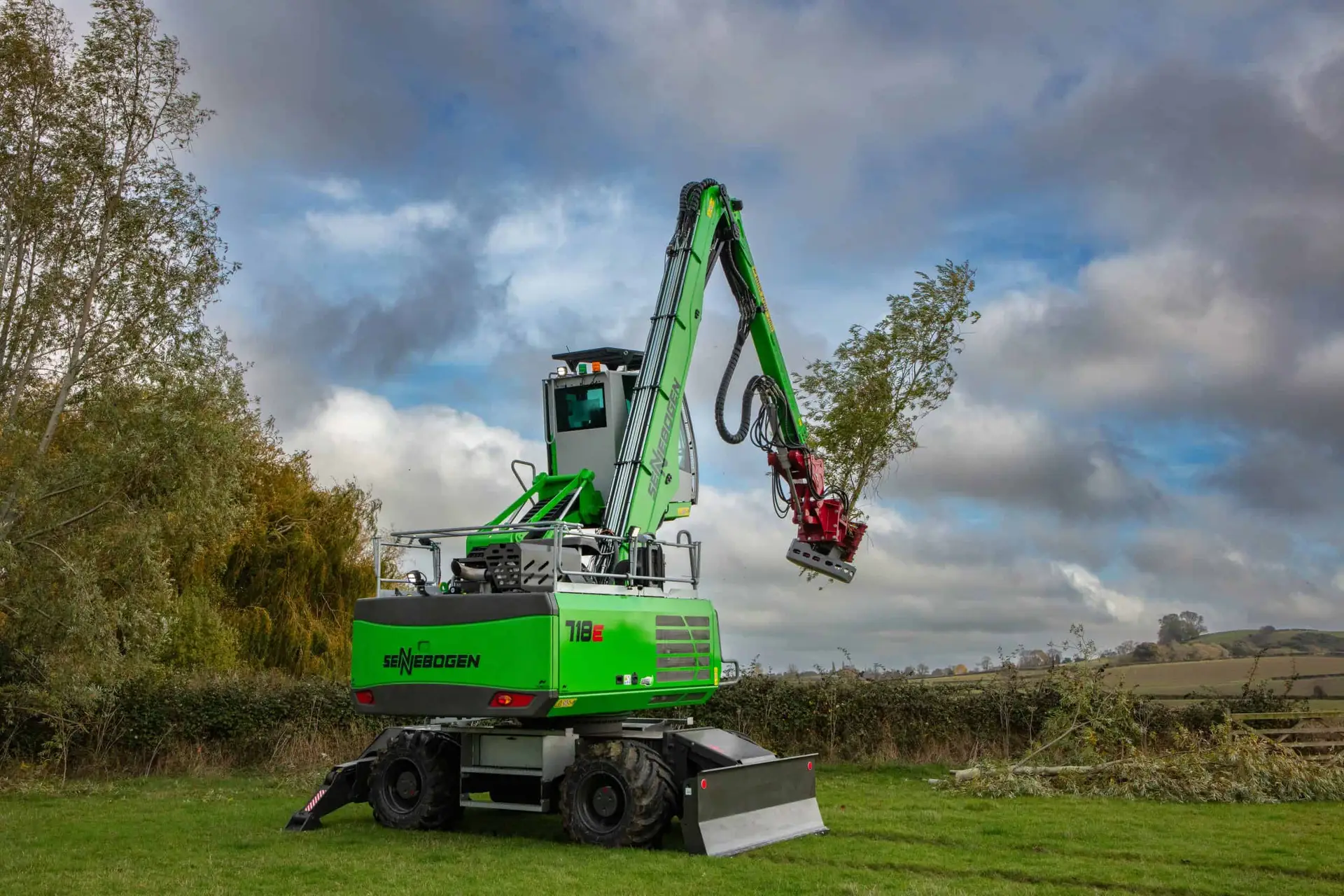
Our tree surgery teams carry out pruning, crown reduction and full tree removal, and our mechanical tree surgery takes trees down with the operator in the cab. If a tree may be protected, tell us the Order reference or conservation area with your enquiry so that the permission can be built into the programme.
Discuss your treesThe short version
Tree permissions in six points
A Tree Preservation Order can protect a tree of any size or species, from the day it is made. Check the Order and the conservation area separately, with the authority, and check again before work starts.
Consent under an Order and a felling licence are separate controls. A licence application covers both, because the Forestry Commission consults the authority.
In a conservation area the requirement is 6 weeks' notice, not consent, for stems over 75 mm at 1.5 m. The authority's answer to a notice can be to make an Order.
A licence is needed for most felling of growing trees above 5 cubic metres in a quarter, unless an exception applies. Gardens, orchards, churchyards and public open space are excepted.
Allow 8 weeks for consent and 3 months for a licence. A dead tree needs 5 working days' notice, and a tree presenting an immediate risk of serious harm needs notice as soon as practicable.
Exceptions are read narrowly and have to be proved. Penalties can reach everyone involved, and a duty to replant passes with the land.
Sources
This guide is general information and is not legal advice. Every statement of law or official guidance above is drawn from the sources listed here, last checked on 6 November 2026. Legislation and guidance change, so confirm the current position before relying on it.
- 1GOV.UK planning practice guidance, Tree Preservation Orders and trees in conservation areas
- 2Forestry Commission, Tree felling: getting permission
- 3Forestry Commission, When a felling licence is needed
- 4legislation.gov.uk, Town and Country Planning (Tree Preservation) (England) Regulations 2012, regulation 14
- 5legislation.gov.uk, Town and Country Planning (Tree Preservation) (England) Regulations 2012, regulation 15
- 6legislation.gov.uk, Town and Country Planning Act 1990, section 210
- 7legislation.gov.uk, Town and Country Planning Act 1990, section 206
- 8Forestry Commission, Managing ash dieback in England
- 9Buckinghamshire Council, Check if a tree has a Tree Preservation Order (TPO)
- 10Natural England and Defra, Countryside hedgerow protection: removing hedgerows
Photograph credits
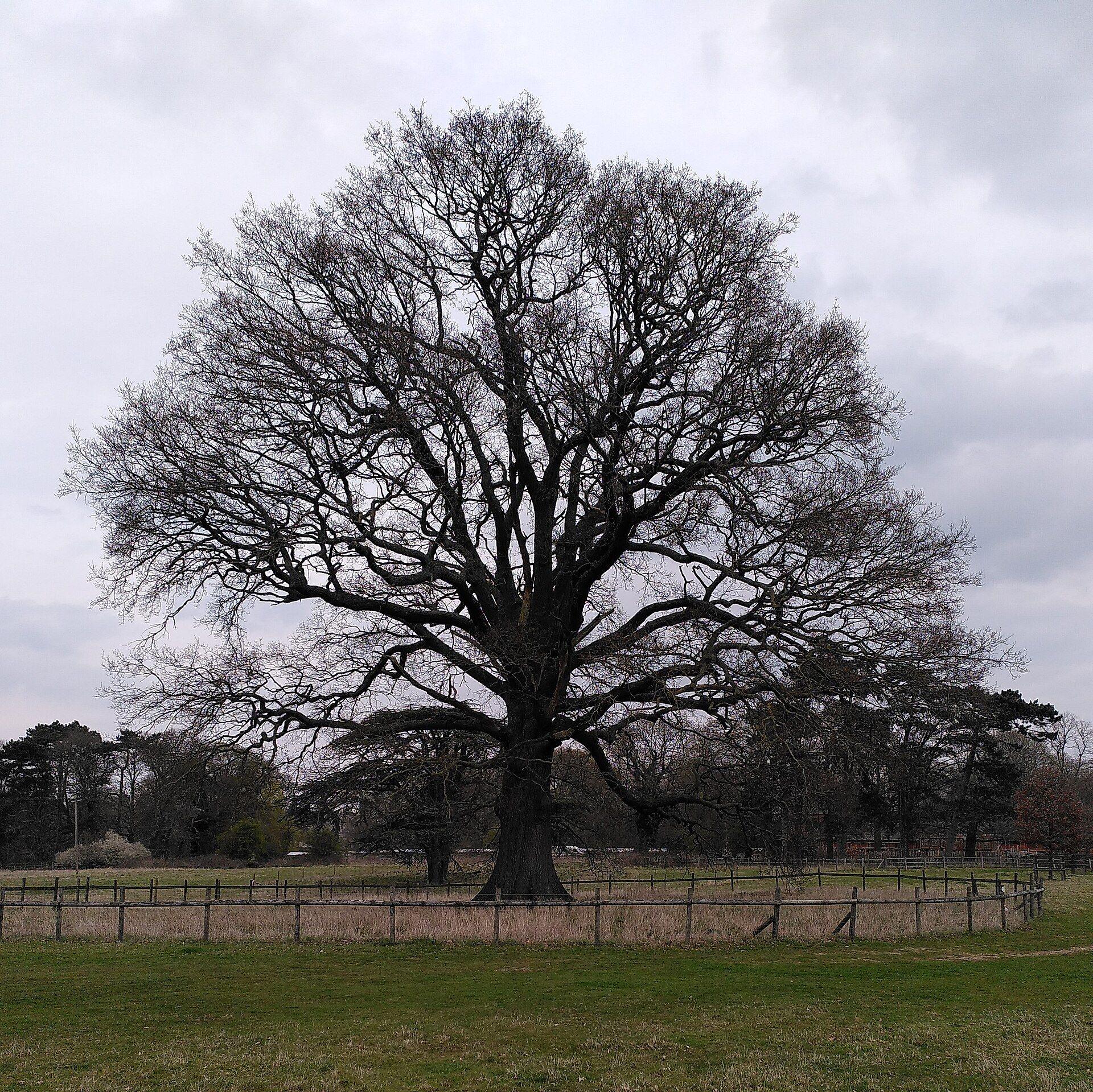
- Veteran oak standing alone in the deer park at Coombe Abbey, its bare crown against a pale winter sky. Photo: A J Paxton, CC BY-SA 2.0, via Wikimedia Commons
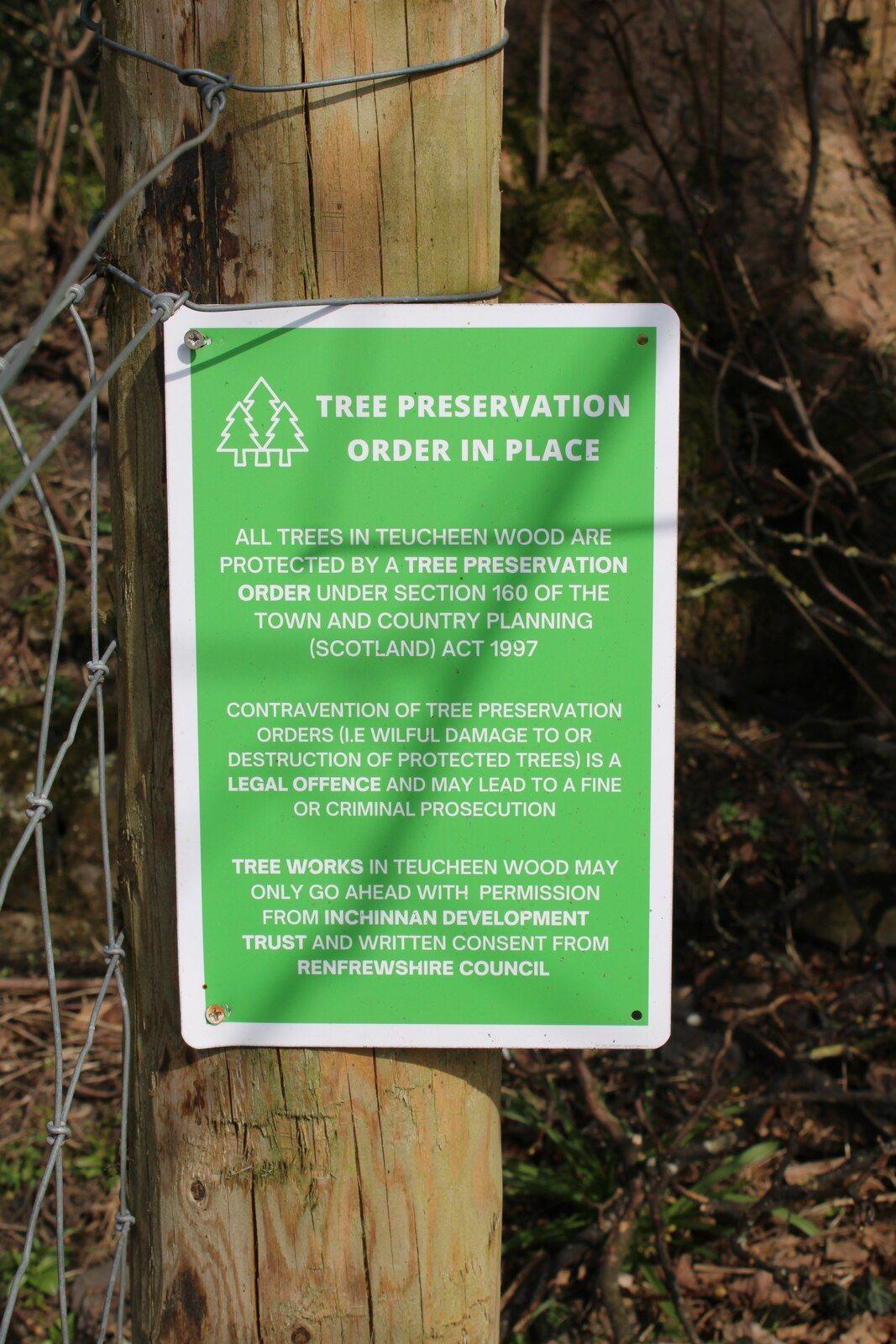
- Green Tree Preservation Order notice fixed to a timber post at the edge of a wood. Photo: Richard Sutcliffe, CC BY-SA 2.0, via Wikimedia Commons
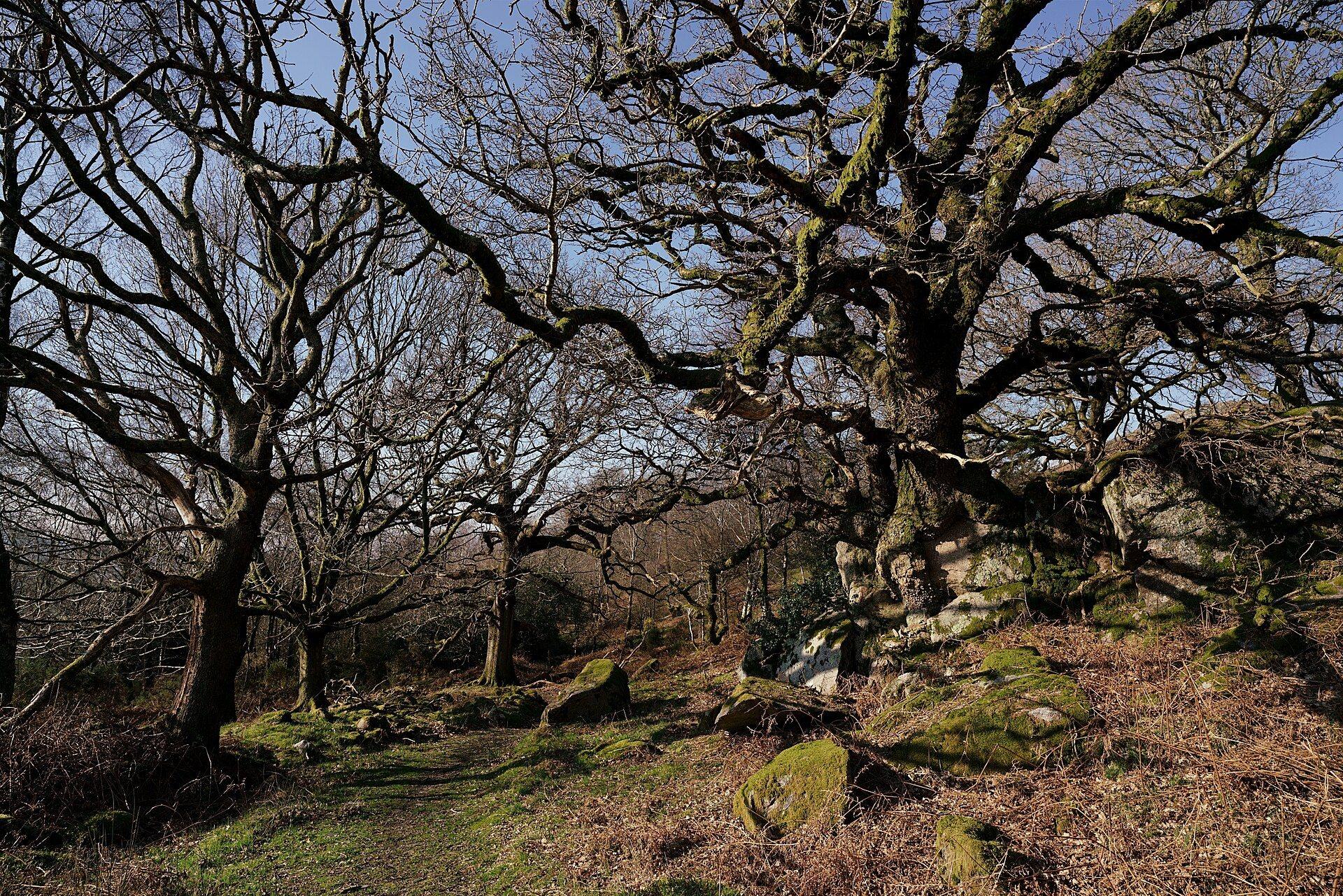
- Old, twisted oak trees spreading over mossy boulders in a woodland. Photo: Peter Trimming, CC BY-SA 2.0, via Wikimedia Commons
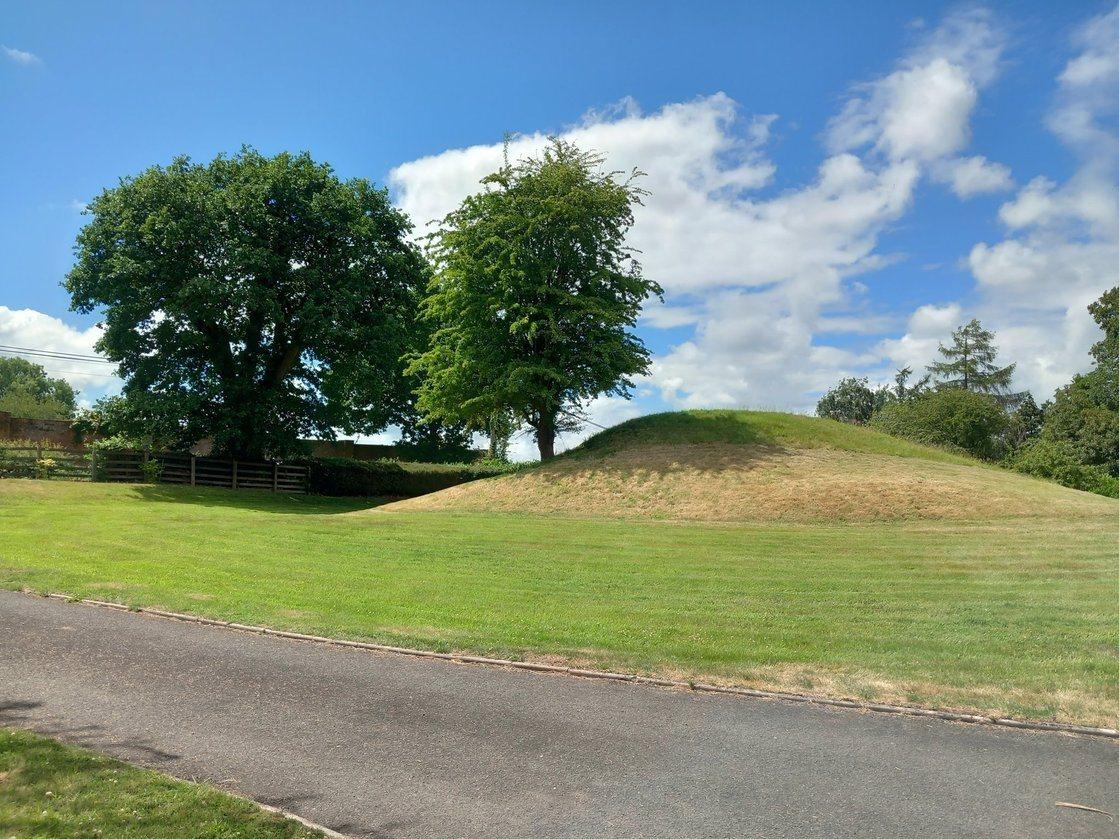
- Two mature oaks in full leaf beside a grassed motte and a park road. Photo: LiamGM, CC BY-SA 4.0, via Wikimedia Commons
These photographs have been resized and cropped to fit the layout. All other photographs are PB Forestry's own.
Get in touch today
Companies we have worked with